In 2017, Meshed began working with the NSW Department of Primary Industries to show how long-range, low-power connectivity could transform the collection and use of agricultural data across regional New South Wales. What started with a single LoRaWAN network at the Orange Research Farm has grown into a private network supporting 11 research farms and the farming communities around them.
From One Research Farm to a Statewide Network
The journey began in October 2017 with the deployment of a LoRaWAN network at the NSW DPI Orange Research Farm. What started as an innovative connectivity project has since expanded into a robust private network supporting 11 research farms across NSW, while also extending connectivity into nearby farming communities.
Today the network provides critical digital infrastructure for researchers to connect sensors, collect environmental and agricultural data and evaluate new technologies in real farming environments. It also demonstrates how reliable connectivity lets producers monitor water, livestock, weather, soil conditions and farm assets across vast rural properties.
The Challenge of Connecting Rural NSW
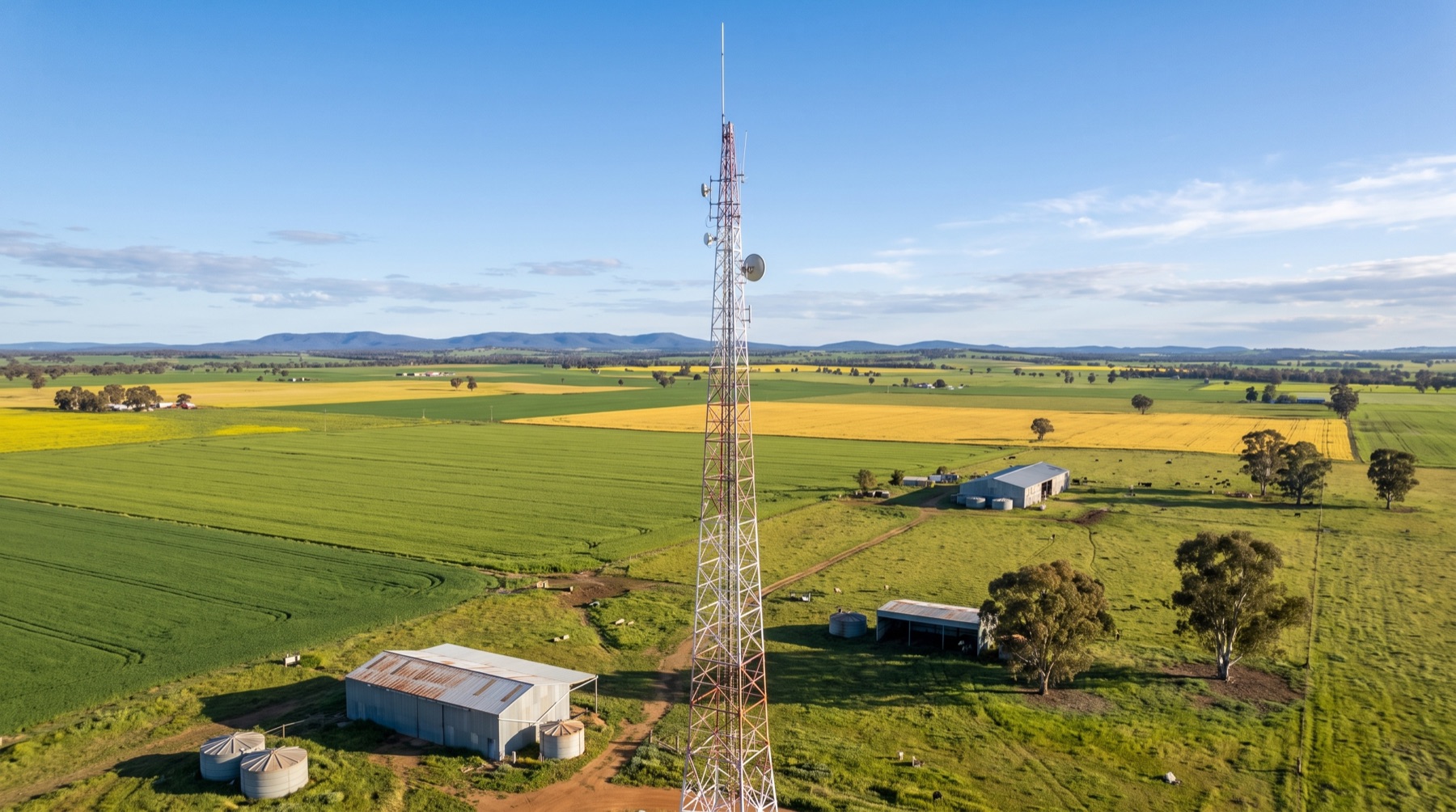
Australian agriculture operates across enormous distances, often in areas where conventional mobile connectivity is limited or unreliable. At the same time, the growing use of smart sensors is creating new opportunities to improve productivity, resource management, livestock welfare and climate resilience.
For NSW DPI, unlocking these opportunities required more than deploying individual sensors. Researchers needed a secure, reliable communications network capable of connecting thousands of low-power devices across geographically dispersed research farms, supporting different sensor manufacturers without creating vendor lock-in, and with the potential to extend beyond research stations to farmers and communities within range.
A Private LoRaWAN Network for Agriculture
Meshed designed, built and operates a private LoRaWAN network that provides the connectivity foundation for NSW DPI smart sensing and agricultural research. Following the first Orange deployment, Meshed expanded coverage across research locations including Bathurst, Blayney, Ebor, Gaden, Wagga, Menangle, Dareton, Tocal, Port Stephens, Trangie and Narrandera.
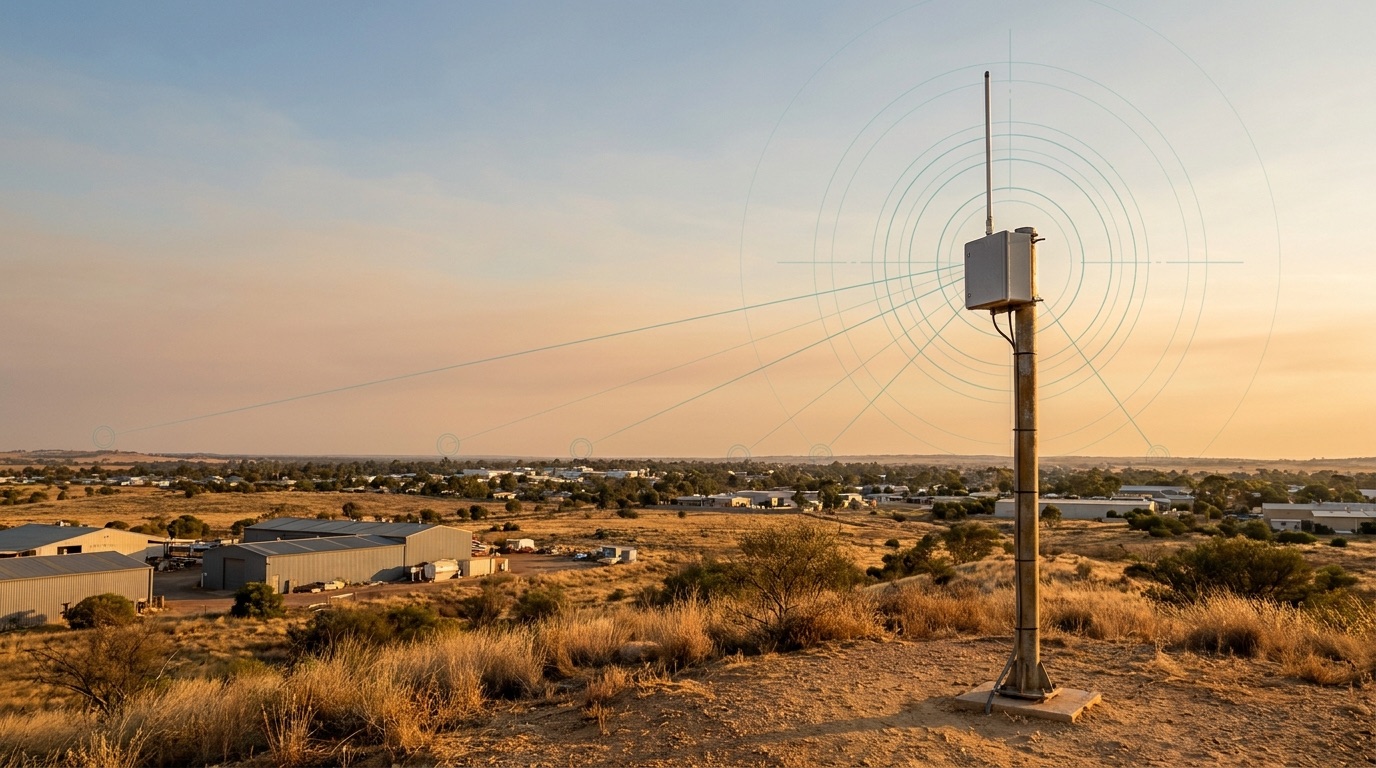
LoRaWAN suits these environments because sensors can communicate over long distances while consuming very little power. A single gateway can potentially receive data from thousands of battery-powered sensors across distances of up to 10 kilometres, depending on local conditions. Meshed provides more than the gateway hardware, its role spans network design, deployment and operation, systems integration, sensor connectivity, data handling and support, giving researchers a scalable environment for developing and testing new smart farming applications.
Inside the AgTech Pilot Farm at Coonamble
The value of this connectivity can be seen at the AgTech Pilot Farm near Coonamble. The mixed farming enterprise runs sheep, cattle and dryland cropping across two properties separated by approximately 50 kilometres, where connectivity and distance made monitoring water, livestock and seasonal conditions difficult.
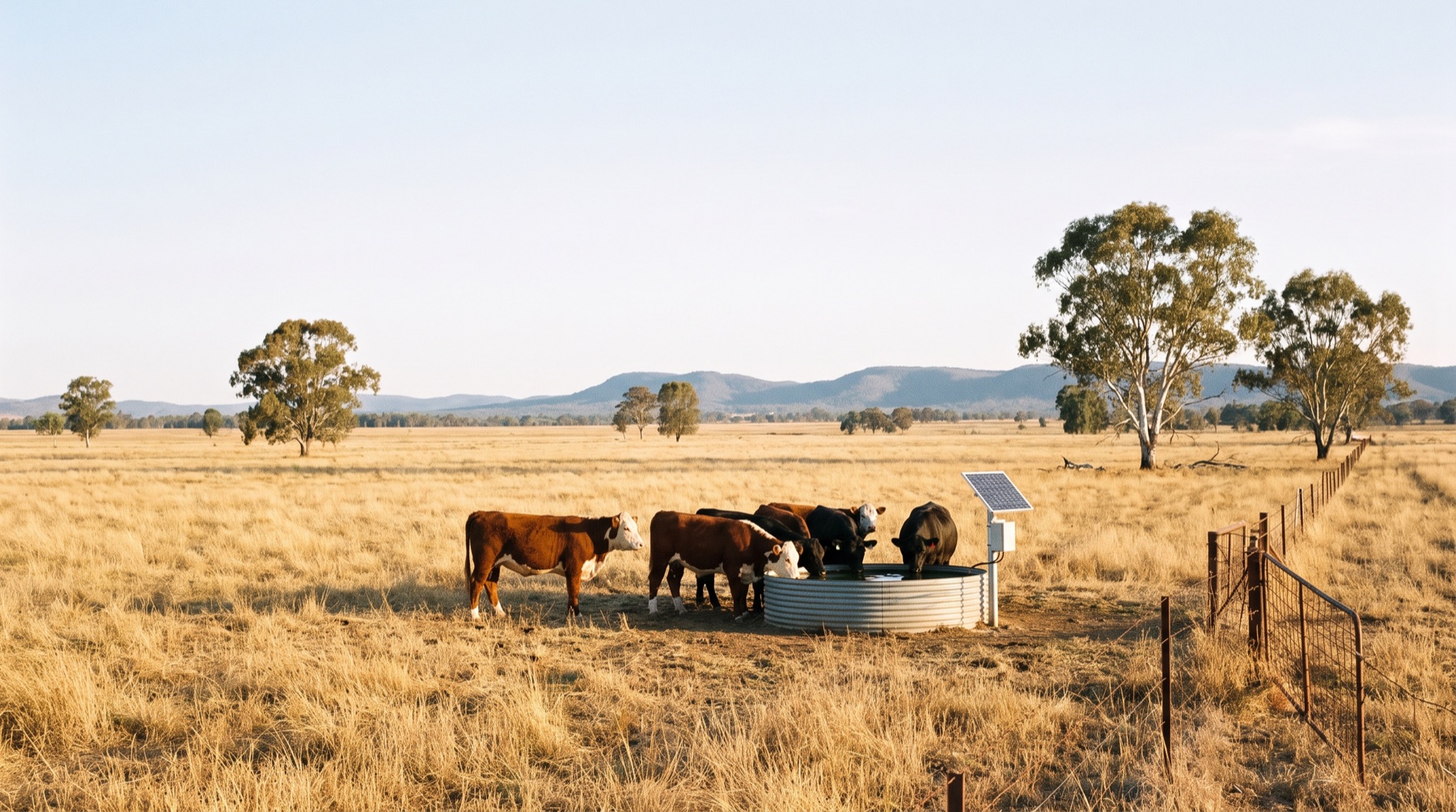
With enhanced farm connectivity and smart sensing, the producer can now remotely monitor water levels in tanks, troughs and bores. GPS ear tags help track cattle, portable weighing systems monitor livestock condition and weight, rain gauges provide paddock-specific rainfall, and soil moisture probes measure conditions to depths of up to 1.8 metres. Weather and temperature sensing supports decisions around crop spraying, including monitoring conditions associated with temperature inversions.
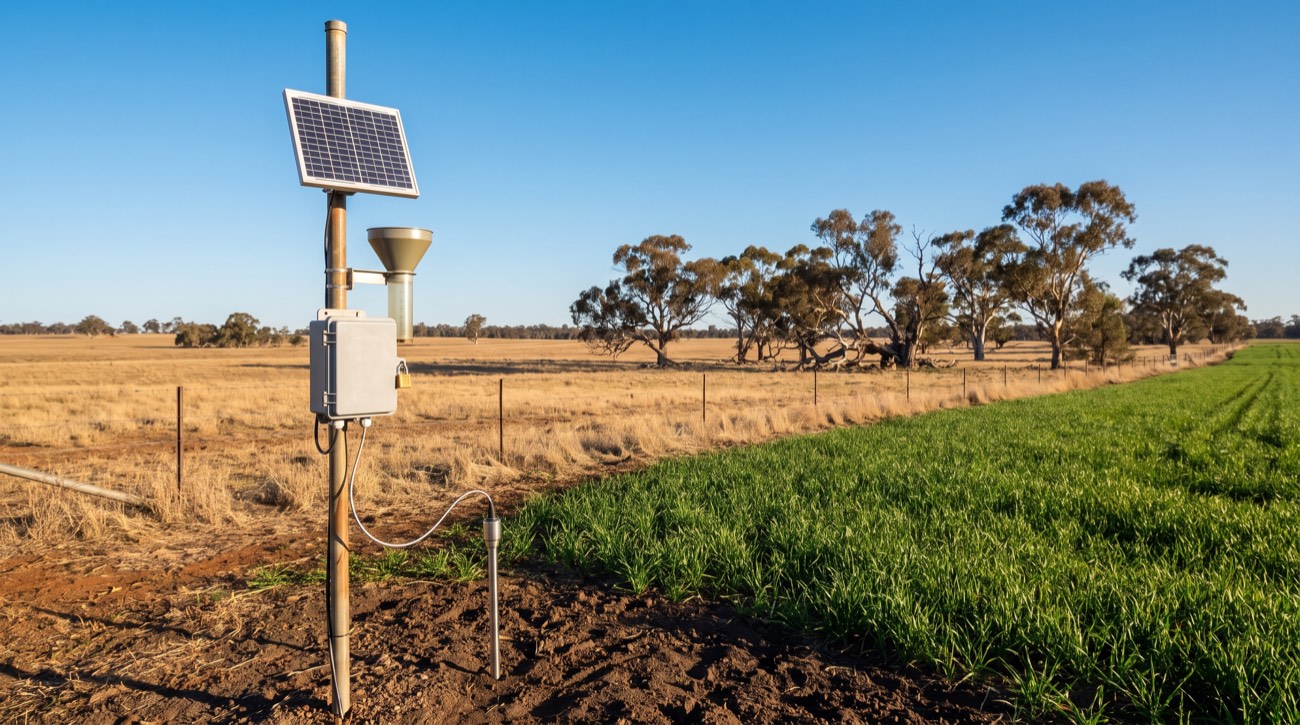
The practical benefits are significant. Fewer routine trips to remote water infrastructure have reduced fuel consumption and vehicle wear, improved safety and freed up more time for productive farm activities.
The Outcomes for Research and Farming
What began with one research farm in 2017 has evolved into statewide digital infrastructure supporting agricultural research, technology demonstration and connected farming. For researchers, the private network provides a secure, scalable foundation for collecting data across multiple sites and connecting a diverse range of sensors. For farmers, it turns remote infrastructure into intelligent assets, water levels monitored without unnecessary travel, livestock condition and location better understood, and local rainfall, weather and soil moisture supporting more informed decisions. For surrounding communities, extending coverage beyond research-farm boundaries creates opportunities for farmers, innovators, schools and universities to explore the technology using shared regional infrastructure.
The NSW Government's Farms of the Future program is accelerating the adoption of AgTech and improved connectivity across the state, supported by demonstration hubs where producers can experience connected farming in real-world environments. Once LoRaWAN connectivity is established, new compatible sensors and applications can be introduced without building a separate network for every use case.
This work supports the NSW Government's Farms of the Future program.
NSW DPIRD Farms of the Future, NSW Department of Primary Industries and Regional Development.
One network. Multiple farms. Thousands of potential sensors.