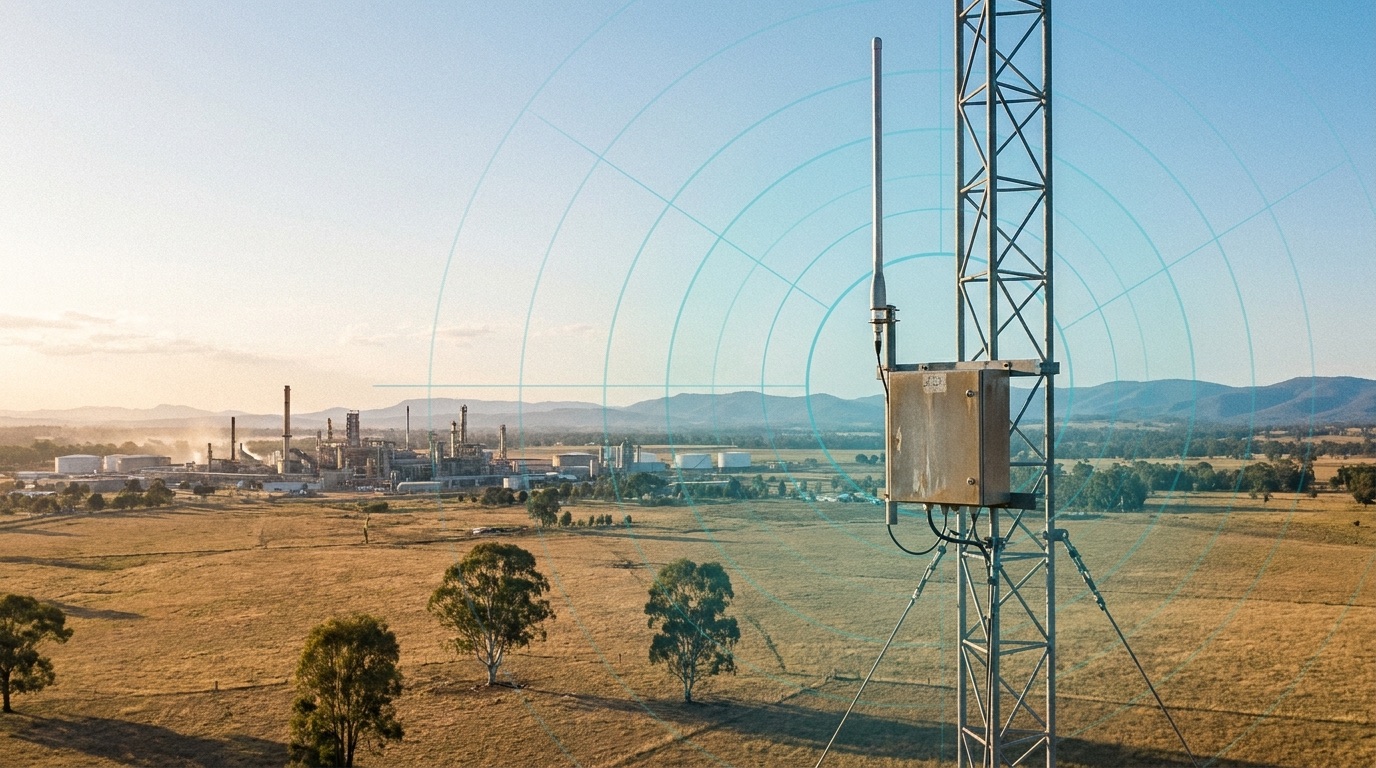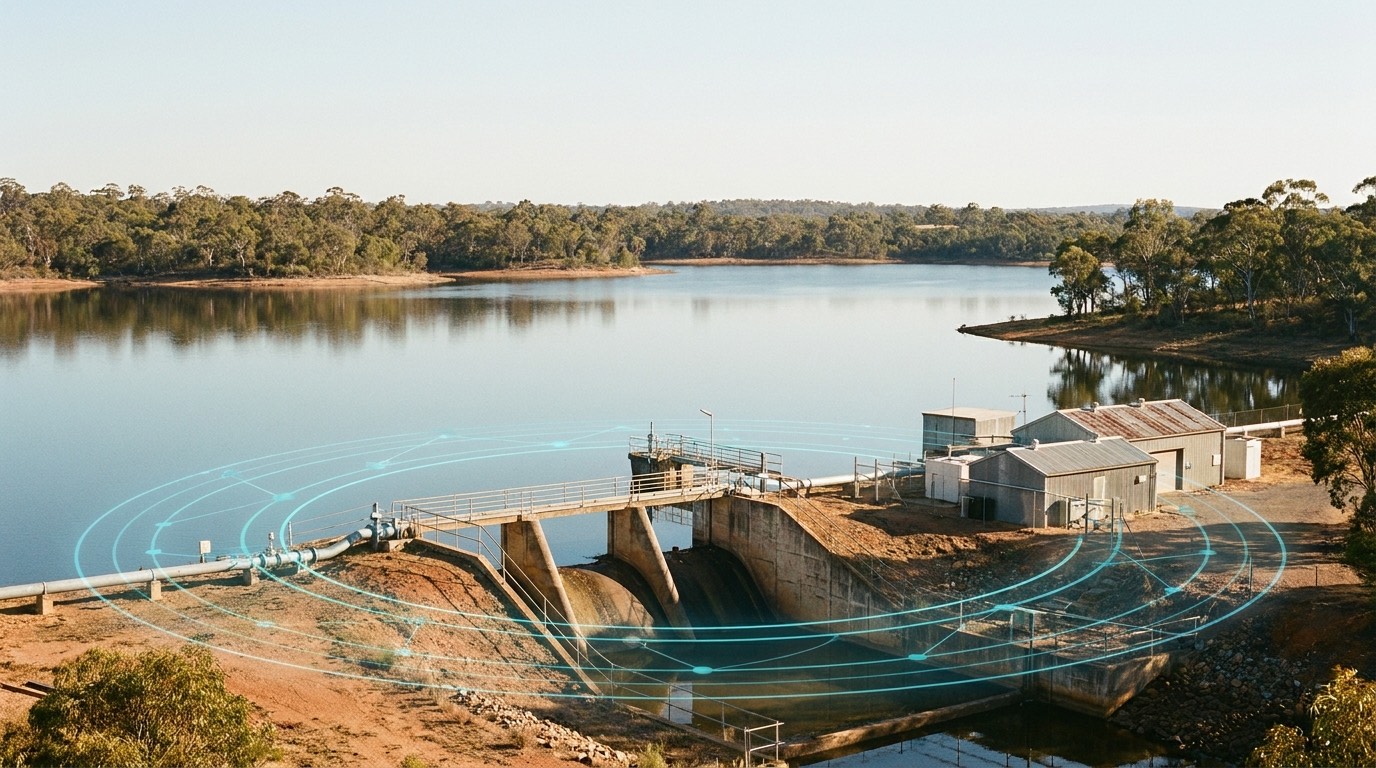
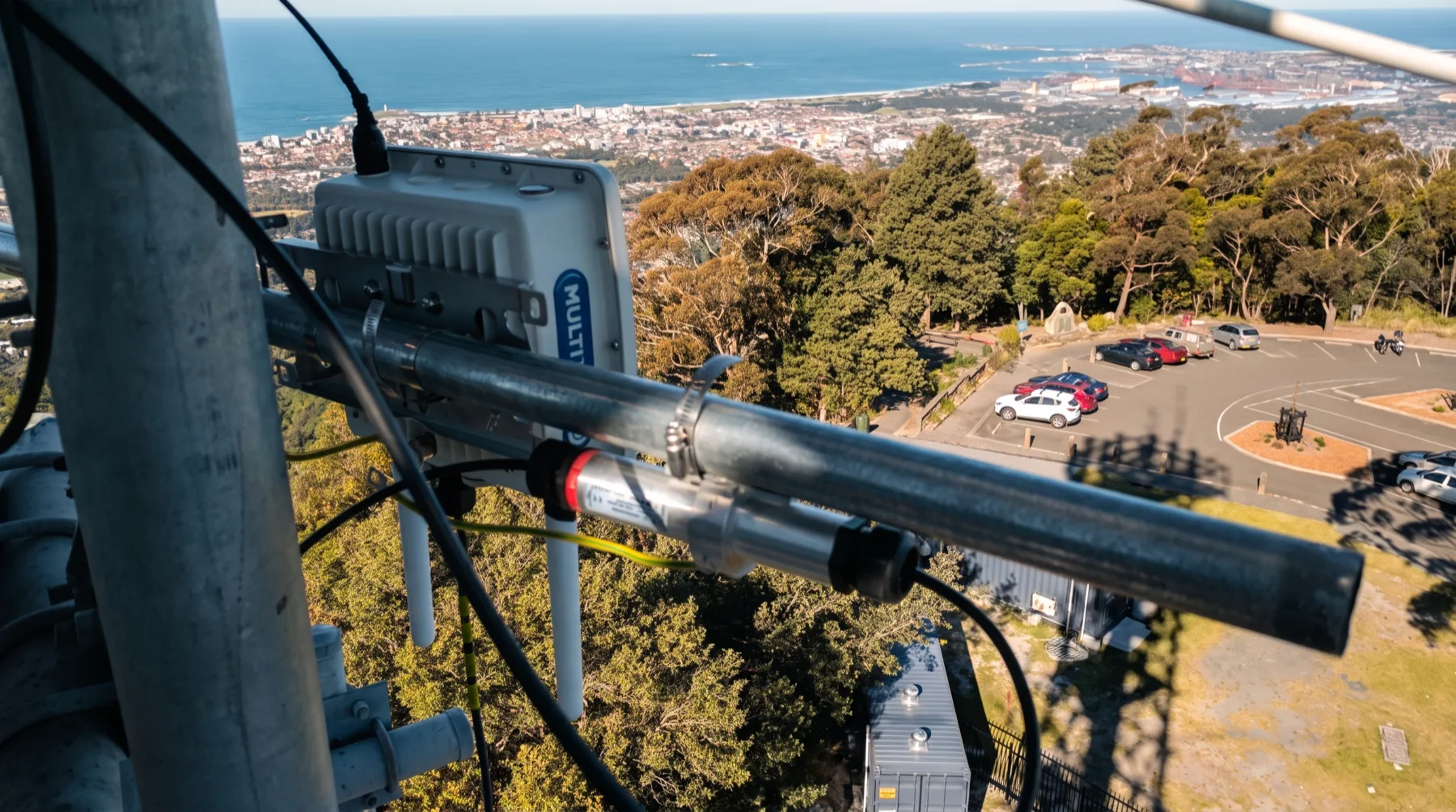
LoRaWAN is a long-range, low-power wireless networking protocol that connects battery-operated sensors to the internet across distances of several kilometres. It was built for the Internet of Things: small, infrequent readings from devices that need to run for years on a single battery, in places where WiFi and cellular are impractical or expensive. For industrial operators, it is the connectivity layer that makes large-scale sensing affordable.
This guide explains what LoRaWAN is, how data travels from a sensor to your dashboard, the benefits that make it the default choice for industrial IoT, and where it is already at work across Australian industry.
What Is LoRaWAN
LoRaWAN, short for Long Range Wide Area Network, is a Low Power Wide Area Network (LPWAN) protocol built on LoRa wireless radio technology. It is designed for long range and small data payloads, which is exactly the profile of most industrial and environmental sensors.
As defined by the LoRa Alliance, the open body that maintains the standard, LoRaWAN wirelessly connects battery-operated devices to the internet across regional, national or global networks. That combination of long range, low power and strong security is why it has become one of the most widely adopted specifications for Internet of Things devices.
How LoRaWAN Works
A LoRaWAN network has four simple parts, and data moves through them in one direction:
- Sensors, or end devices, sit on the things you want to measure, a motor, a water meter, a gate or a paddock, and send small readings wirelessly.
- Gateways receive those signals over the air and relay them on. Thanks to the long range, one gateway can cover a wide area, and a single site often needs only a few.
- A network server collects, de-duplicates and secures the data arriving from every gateway.
- A dashboard or application turns the raw readings into charts, alerts and decisions.
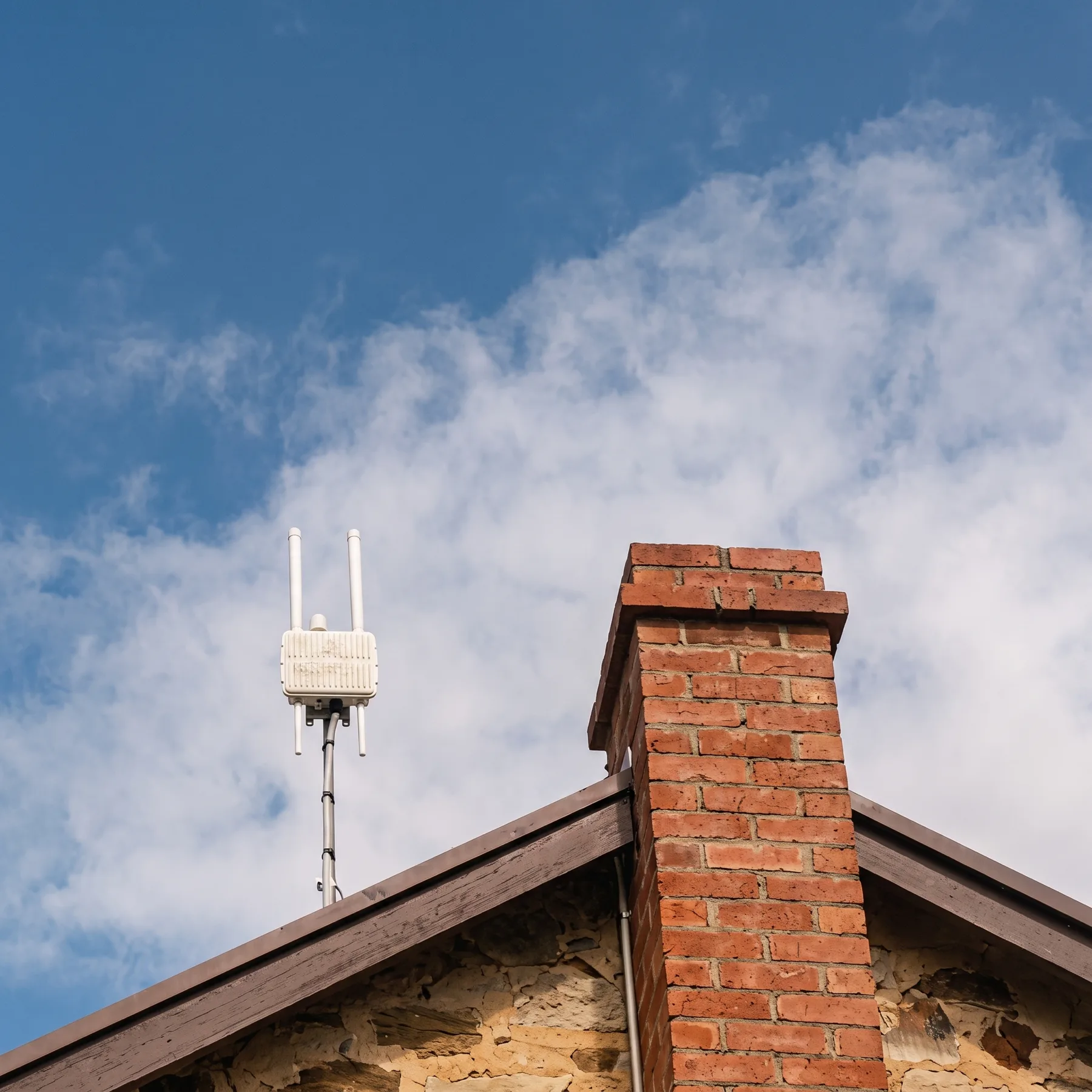
Because the devices are wireless and battery-powered, they can go where other networks cannot: up a light pole, deep inside a building, underground, or out in a remote paddock.
The Benefits of LoRaWAN
A handful of characteristics make LoRaWAN the default choice for large-scale, real-world sensing:
- Long range and deep penetration: kilometres of coverage outdoors, with signal that reaches indoors, underground and through industrial structures.
- Years of battery life: very low power draw means sensors can run for years without mains power or recharging.
- Scalable: the network is bi-directional and expandable, so devices can be added without disrupting the existing architecture.
- Reliable and simple: a far simpler architecture than cellular, which makes faults easier to diagnose and resolve.
- Secure: end-to-end encryption using two layers of cryptography.
- Flexible and private: you decide where gateways sit and who owns the network, with no carrier lock-in, no SIM cards and no recurring data plans on end devices.
- An open global standard: a large multi-vendor ecosystem, and free to use on community networks such as The Things Network.
Where LoRaWAN Is Used
LoRaWAN underpins a wide range of deployments across Australia and beyond:
- Smart cities: more than 70 councils across Australia and New Zealand run Meshed LoRaWAN networks for parking, waste, environmental and pedestrian data.
- Industrial and asset monitoring: vibration, pressure, temperature and corrosion sensing on plant and equipment for predictive maintenance.
- Smart water and utilities: network-wide metering, tank levels, flow and water-quality monitoring.
- Agriculture and environment: soil moisture, weather and tank monitoring across large, remote properties.
- People counting: privacy-safe pedestrian and crowd measurement for precincts and public space.
LoRaWAN, deployed at national scale
We run Australia's largest managed LoRaWAN estate, more than 70 council networks plus private industrial sites. Talk to the team that builds and runs them.
How It Compares to Cellular
LoRaWAN is not the only way to connect IoT devices, and it is not always the right one. Cellular options such as NB-IoT and LTE-M suit higher-bandwidth or carrier-managed use cases. LoRaWAN wins where low power, low operating cost, private network control and hard-to-reach coverage matter most, which describes the majority of industrial sensing. We compare the two in detail in a separate guide.
Getting Started
For most operators, the fastest way to see value is a small, focused deployment: a few gateways, a set of sensors on the assets that matter most, and a dashboard that turns the data into action. Because gateways cover wide areas and the sensors install in minutes without wiring, a network can be running in days, then scaled as the value becomes clear.
Meshed has delivered enterprise-grade LoRaWAN for over a decade across government and industry in Australia, the Asia Pacific and the United States. If you are weighing up connectivity for an IoT project, we can help you start small and scale with confidence.