
Unplanned downtime in manufacturing, mining, oil and gas, ports and transport costs heavy industry billions annually. Vibration monitoring of rotating equipment, including motors, pumps, conveyors, compressors and fans, provides early warning of mechanical failure before production is impacted. Combined with wireless connectivity, real-time analytics and enterprise integration, condition monitoring transforms maintenance from reactive to predictive.
This article explains how wireless vibration sensing works, why LoRaWAN is well suited to industrial environments, and how one global manufacturer avoided more than 1,950 hours of unplanned downtime using this approach.
Why Condition Monitoring Matters for Heavy Industry
Heavy industries are under increasing pressure to improve productivity, strengthen safety outcomes and meet environmental targets. Traditional maintenance models based on fixed schedules or reactive repairs are being replaced by real-time condition monitoring systems that continuously assess the health of critical assets.
Modern smart asset management combines several capabilities working together:
- Industrial sensors for real-time visibility across operations
- AI and machine learning for anomaly detection and predictive maintenance
- Digital twins for modelling and optimisation
- Dashboards and enterprise integrations for decision-making at scale
The end goal is not just monitoring. Systems increasingly sense, predict and trigger action in real time to improve uptime, efficiency and sustainability. In heavy asset industries, where a single equipment failure can halt production, delay shipments or create safety risks, this shift is especially valuable.
How Vibration Monitoring Detects Problems Before Failure
Many of the most expensive industrial failures begin as small mechanical changes that go unnoticed. Misalignment, imbalance, bearing wear, cavitation, looseness or lubrication issues create changes in vibration signatures long before catastrophic breakdown occurs.
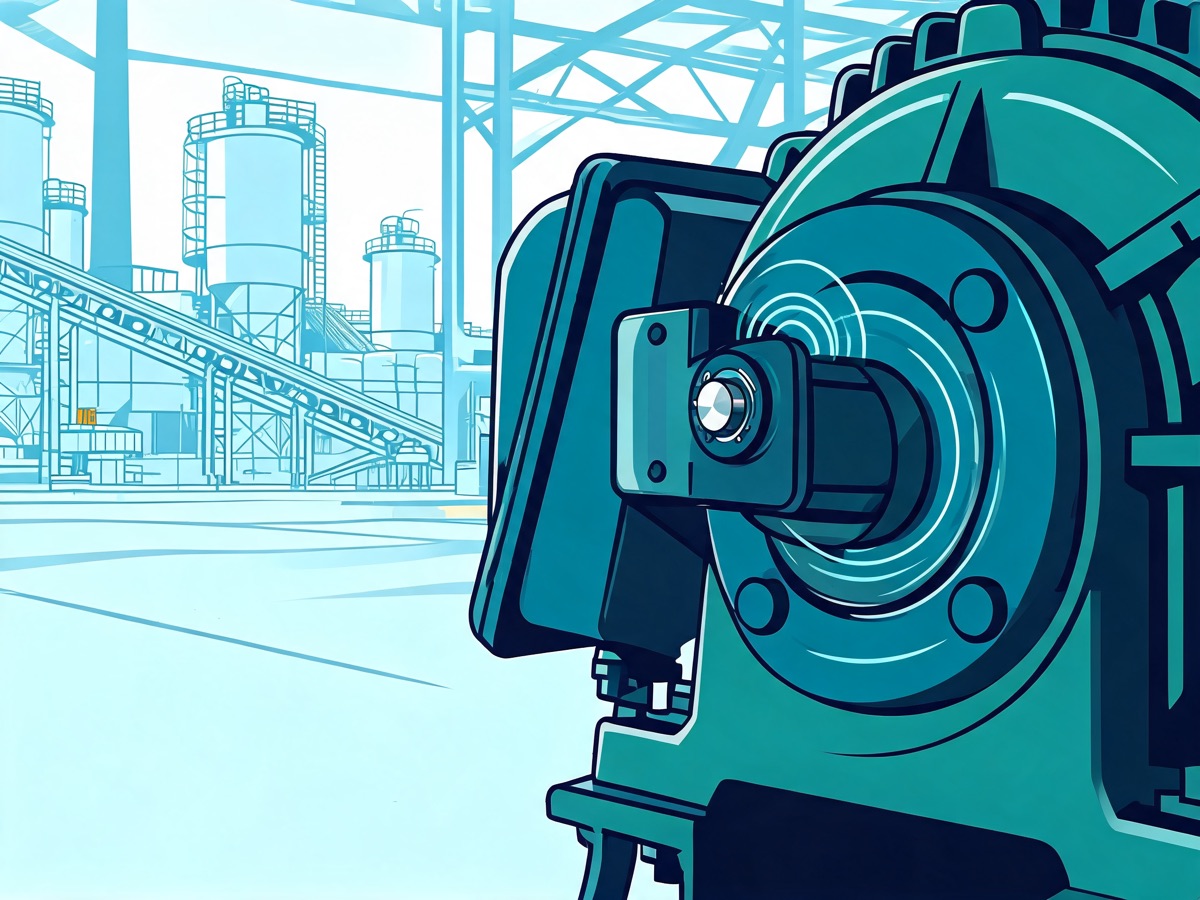
Wireless vibration sensors enable continuous condition monitoring of rotating assets without expensive cabling. Real-time data can then be trended, alarmed and analysed using several key metrics:
- Velocity RMS (VRMS): average vibration velocity, often the primary machine health indicator
- Acceleration RMS (ARMS): useful for detecting turbulence, cavitation and high-frequency issues
- Acceleration Peak: captures shocks and impacts from sudden mechanical events
- Crest Factor: highlights intermittent impacts or abnormal peaks in vibration patterns
- Kurtosis: provides early indication of bearing or mechanical anomalies
- Temperature: valuable when correlated with vibration trends to confirm developing faults
These metrics allow maintenance teams to identify deteriorating assets earlier and intervene during planned maintenance windows, rather than responding to unplanned breakdowns.
Why Wireless Monitoring Works in Heavy Industry
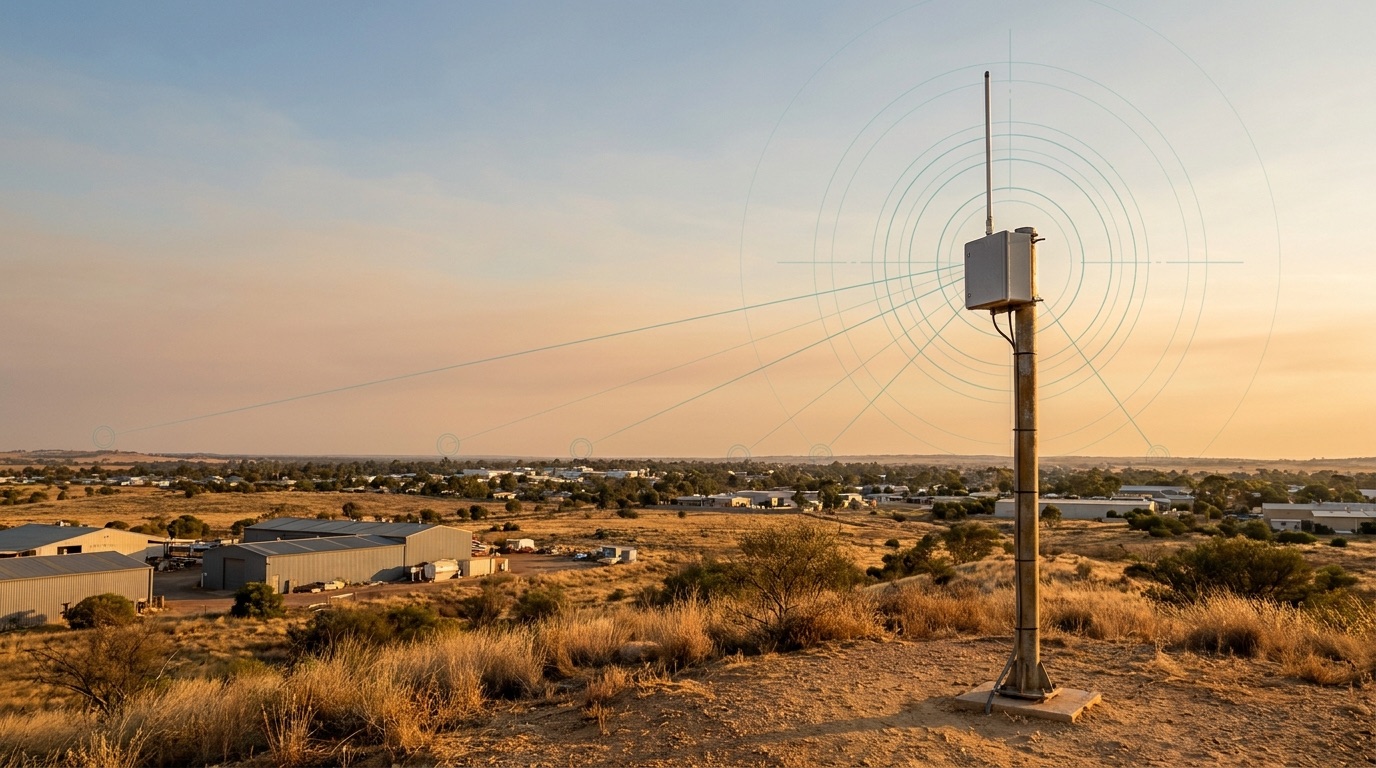
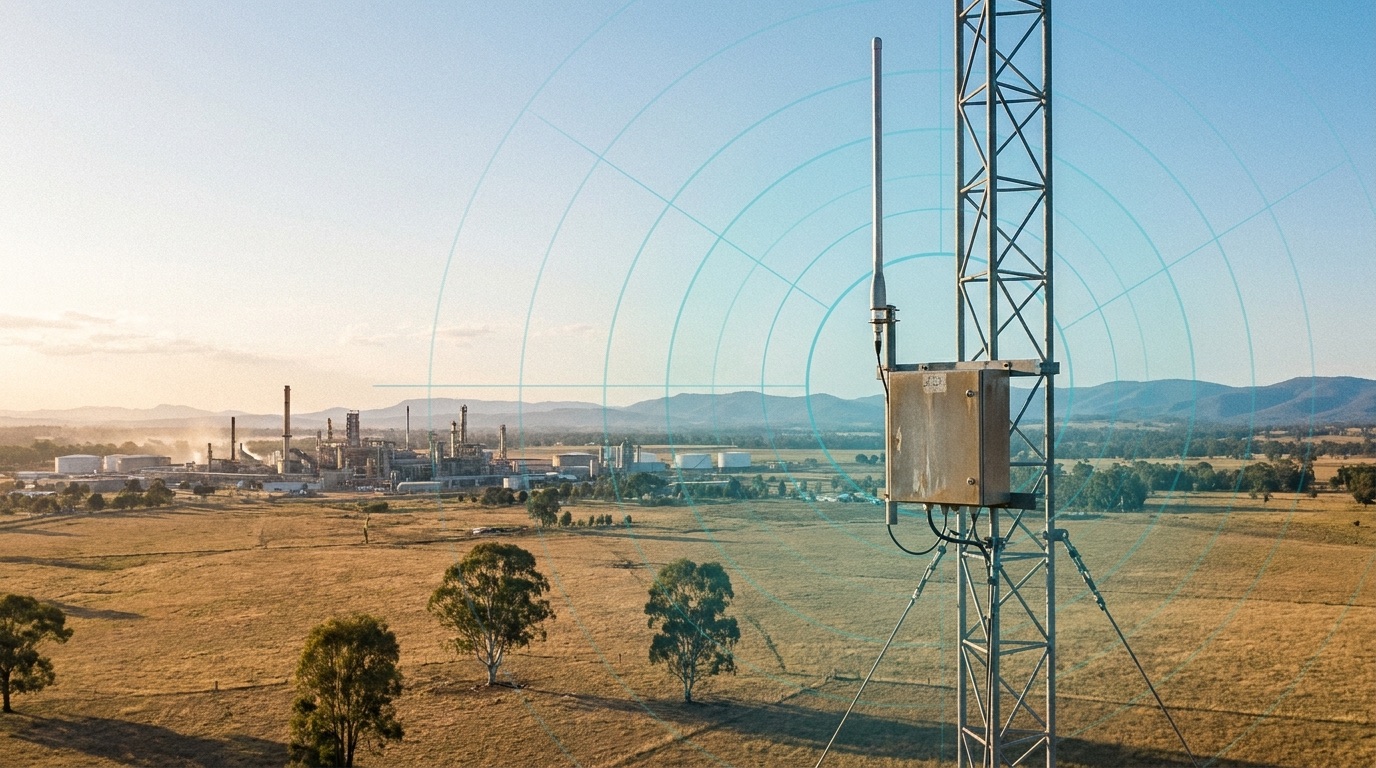
One of the biggest challenges in industrial sensing is connectivity. Assets are often spread across large sites, underground facilities, ports, rail corridors or complex factory floors where traditional wireless networks struggle.
LoRaWAN addresses these challenges because it offers:
- Long-range wireless coverage with deep penetration through industrial structures
- Low power consumption with multi-year battery life
- Secure end-to-end encrypted communications
- A global open standard with a large ecosystem of robust industrial sensors
- No SIM cards or recurring cellular plans for end devices
This makes LoRaWAN particularly effective for distributed vibration monitoring, pressure sensing, environmental monitoring, tank levels and asset tracking across sites where cabling is impractical or prohibitively expensive.
LoRaWAN vs NB-IoT for Industrial Sensing
While NB-IoT and cellular technologies suit higher bandwidth or carrier-managed use cases, LoRaWAN offers advantages where low power, lower operating cost, private network control and hard-to-reach coverage are priorities.
| Capability | LoRaWAN | NB-IoT |
|---|---|---|
| Network ownership | Public or private | Carrier managed |
| Battery life | Excellent, multi-year | Good |
| Deep indoor / remote coverage | Strong | Variable by carrier footprint |
| Deployment speed | Fast for private sites | Depends on carrier rollout |
| SIM management | Not required | Required |
| Best use cases | Industrial sensing, mining, factories, utilities | Smart meters, carrier IoT, mobile assets |
| Ecosystem | Large global open standard | Strong telecom ecosystem |
Wireless vibration monitoring, deployed and proven
We run wireless condition monitoring across heavy industry sites in Australia and internationally. Talk to the team that has done it.
Predictive Maintenance at Scale
A major global manufacturing organisation implemented a large-scale smart asset management program focused on predictive maintenance across its operations.
The business had already trialled multiple sensing applications including water metering, pressure monitoring and asset tracking. However, vibration monitoring of mission-critical machines emerged as one of the highest-value use cases.
Using a private LoRaWAN network, the company initially piloted predictive maintenance with several hundred vibration sensors. Data was integrated into advanced AI and analytics platforms to detect early signs of degradation.
The outcomes were compelling: more than 1,950 hours of unplanned downtime were avoided across the trial operations, along with 53 prevented process interruptions. These measurable results created a strong business case for rapid expansion, leading to deployment across Australia, Asia Pacific and the United States. Today, thousands of sensors are operating across port facilities, factories and processing plants, with vibration and pressure monitoring among the most widely adopted applications.
The key lesson: once organisations see measurable reductions in downtime, industrial condition monitoring scales quickly.
Data Visualisation, Alerts and Enterprise Integration
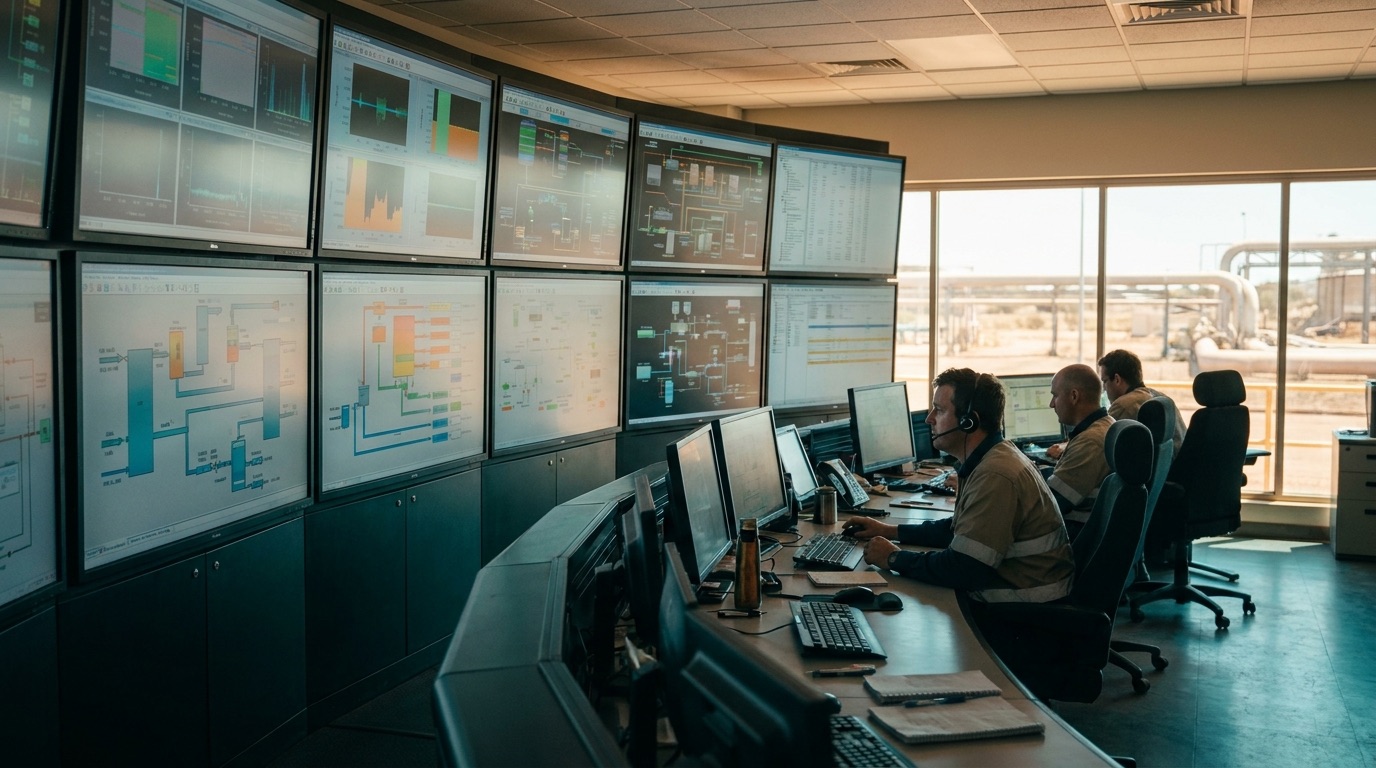
Real-time dashboards allow operations and maintenance teams to view machine health across sites, set thresholds, alerts and triggers, track device health and signal strength, compare trends across time periods, and prioritise maintenance tasks based on risk.
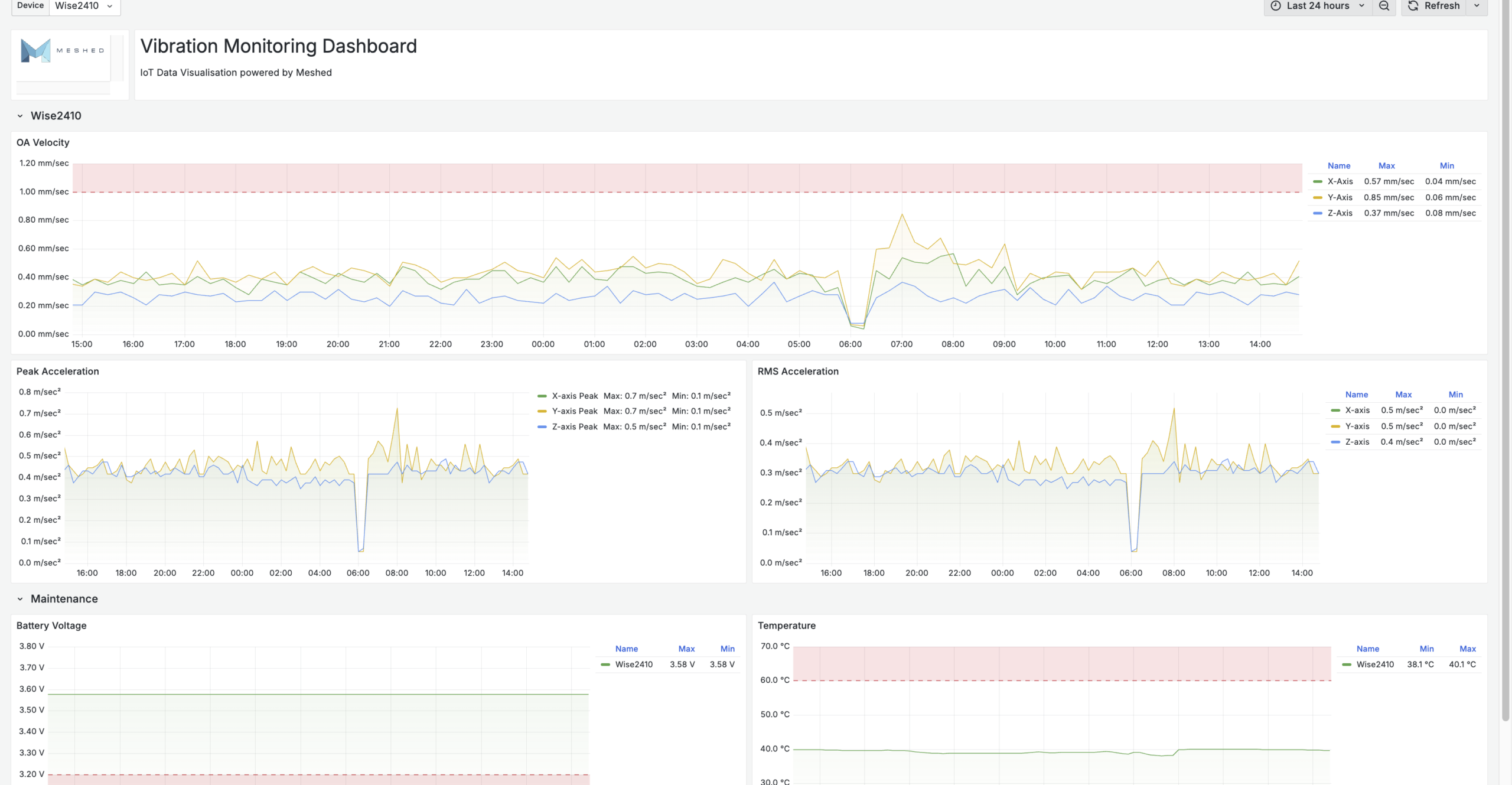
Critically, vibration monitoring data must integrate seamlessly into existing enterprise workflows. As a systems integrator, Meshed provides integration pathways into proprietary and non-proprietary automation platforms, SCADA systems, predictive maintenance software, asset management and ERP systems. This embeds sensor intelligence into existing workflows rather than creating another isolated dashboard.
The Role of Standards in Industrial Automation
Large-scale condition monitoring programs require trust, interoperability and resilience. Recognised industry standards underpin every successful deployment at scale.
Frameworks such as ISO 55000/ISO 55001 for asset management help organisations align maintenance strategy with business value. ISA-95 supports integration between operational technology (OT) and enterprise systems. Standards for industrial cybersecurity, including IEC 62443 and ISO/IEC 27001, protect connected environments. Digital twin frameworks such as ISO 23247 are increasingly relevant for smart manufacturing, while AI management standards like ISO 42001 are shaping governance of predictive analytics platforms.
For Australian operators of critical infrastructure, regulatory frameworks such as the SOCI Act raise the importance of secure data flows, network resilience and governance. Leading organisations use these standards not as compliance checklists, but as the foundation for scalable and reliable automation programs.
The Future of Industrial Condition Monitoring
For heavy asset industries, real-time sensing is rapidly becoming a strategic necessity rather than an optional innovation. When vibration monitoring, secure connectivity, AI analytics and enterprise integration work together, organisations gain better equipment performance, reduced unplanned downtime, lower maintenance costs, improved worker safety, stronger environmental compliance and greater operational resilience.
The next era of industrial automation belongs to organisations that can sense conditions in real time, predict problems early and act before failure occurs. In asset-intensive sectors, that capability can mean the difference between disruption and competitive advantage.