Livestock producers manage critical resources across large and often remote properties, where checking a water trough or reading the local weather can mean hours of driving. As part of its $6.7 million Climate Smart Pilots program, the NSW Department of Primary Industries and Regional Development established the Livestock Pilot to test how digital agriculture could help. Meshed provided the on-farm LoRaWAN connectivity, automatic weather stations and water-trough level sensors that turned isolated farm assets into connected sources of practical information.
The Challenge on Remote Livestock Properties
Livestock producers make critical decisions every day about water availability, animal welfare, pasture conditions and weather. Across large and often remote properties, obtaining timely information traditionally requires producers to physically inspect infrastructure and rely on weather observations that may not accurately represent conditions on their farm.
The multi-site pilot operates across Molong, Orange, Eurimbla, Tullamore, Binginbar and Trangie in the Central West and Central Tablelands of New South Wales. The challenge was not simply installing sensors. These devices needed a reliable, low-power communications network capable of transmitting data from assets distributed across large rural properties.
Meshed's Smart Farming Solution
Meshed provided the LoRaWAN on-farm connectivity infrastructure and the key sensing technologies that let information from the paddock be collected remotely and made available digitally. LoRaWAN suits agricultural environments because it transmits small amounts of sensor data over long distances while consuming very little power, so battery-powered devices can be deployed where conventional power and communications are impractical.
For the Livestock Pilot, Meshed's solution included:
- On-farm LoRaWAN connectivity providing the communications layer between remotely deployed sensors and the project's digital systems.
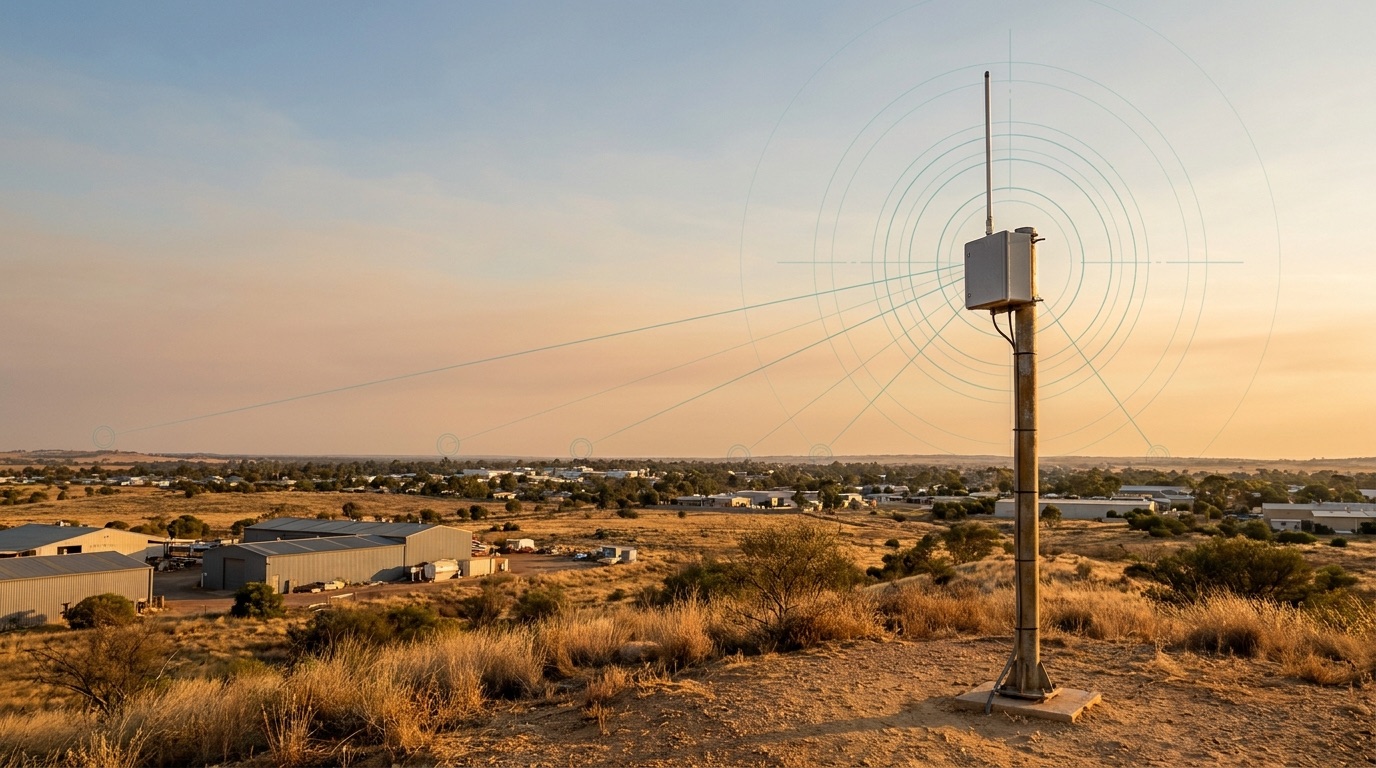
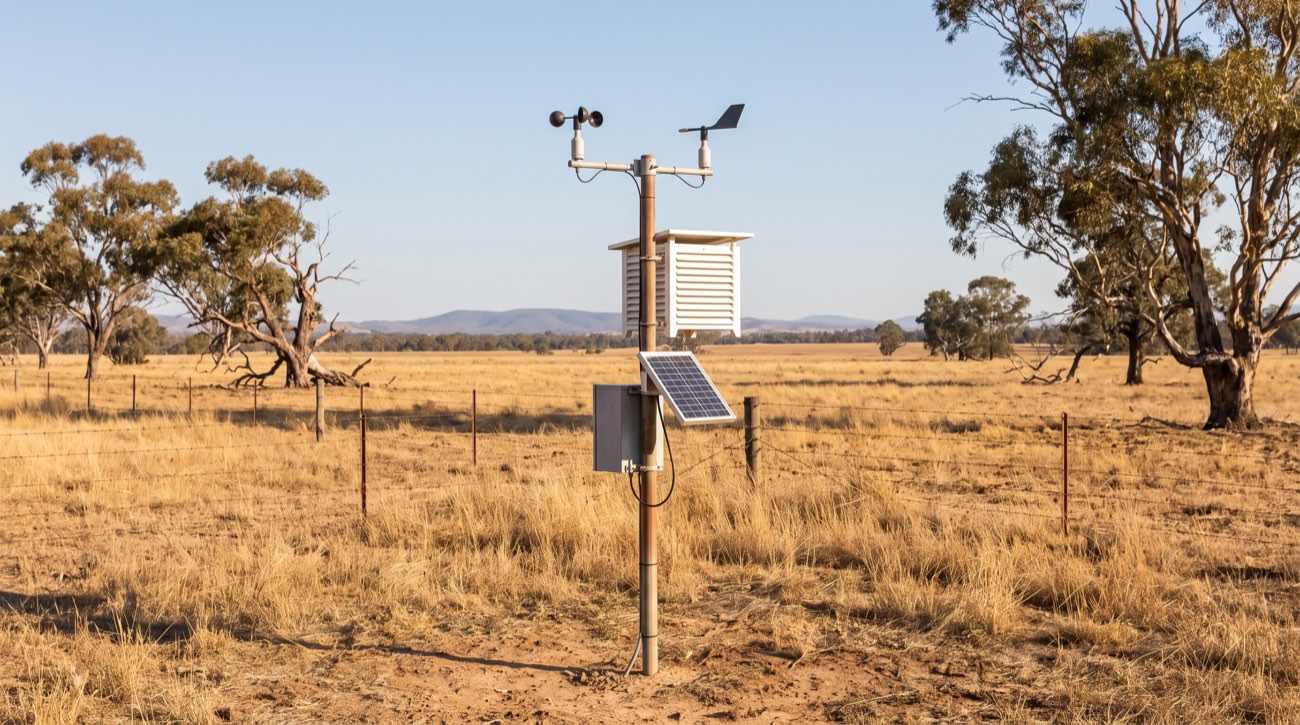
- Automatic weather stations capturing highly localised weather conditions relevant to livestock management.
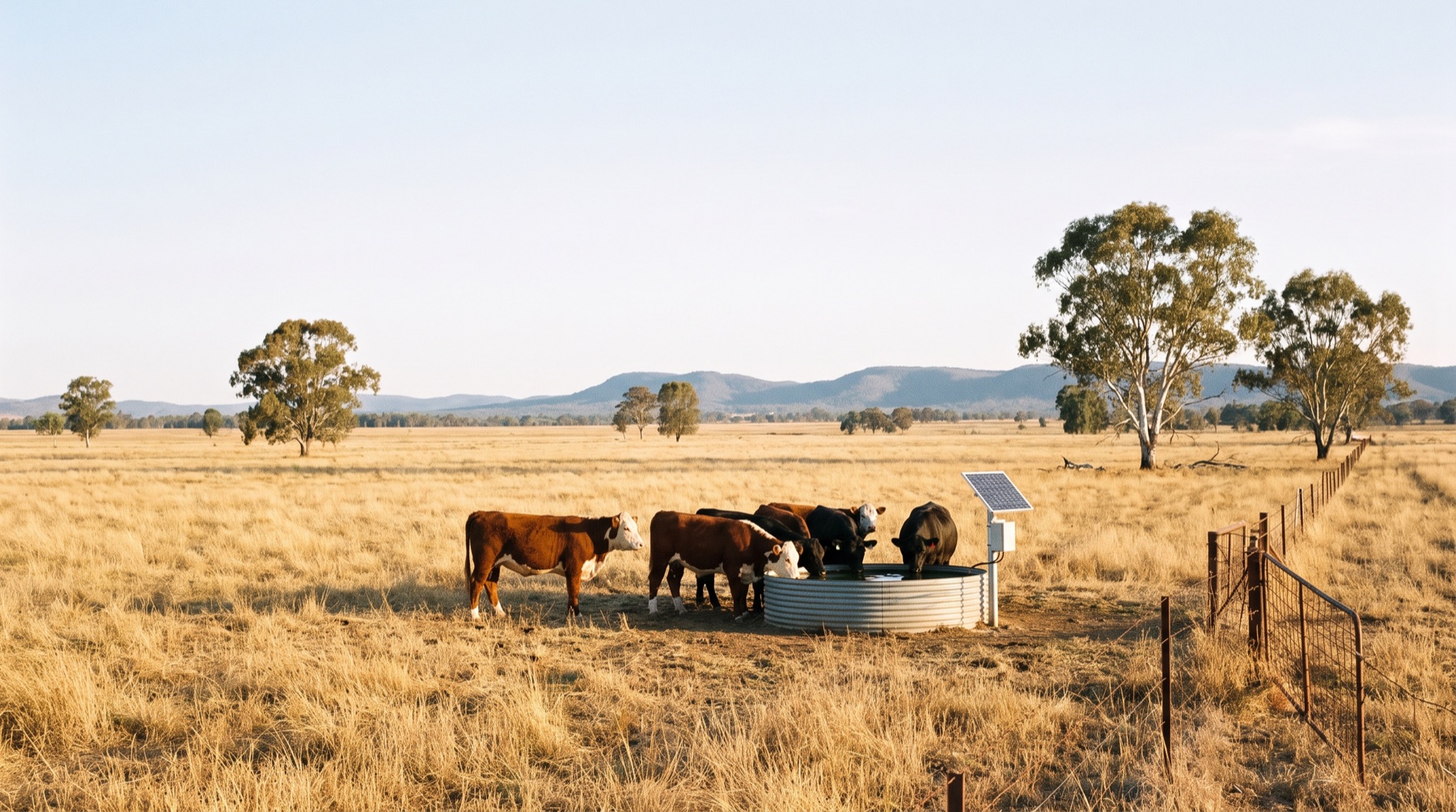
- Water-trough level sensors giving remote visibility of one of the most critical resources on a livestock property.
Monitoring Livestock Water Remotely
Reliable access to drinking water is fundamental to livestock welfare, but checking troughs across large properties can consume considerable time, labour and fuel. Meshed's connected trough sensors provide ongoing measurements of water level and transmit them over the LoRaWAN network, giving producers greater visibility of their livestock water infrastructure without visiting every trough.
Water-level data reveals more than whether a trough simply contains water. A change, or an unexpected lack of change, can point to a leak or a problem with an electrical or solar pump, letting the producer investigate before a small issue becomes a serious one.
Hyperlocal Weather for Animal Welfare
Regional weather observations do not always reflect the conditions experienced by livestock on an individual property. Meshed's automatic weather stations provide local measurements of temperature, humidity, wind, rainfall and solar conditions that help producers understand heat-load and wind-chill risk.
That supports better-informed decisions around lambing and calving, shearing, the provision of shade, livestock nutrition and preparation for extreme weather. Data collected in the field reaches producers and researchers through NSW DPIRD's FarmDecisionTECH platform and the Meshed Asset Intelligence Platform, turning previously isolated farm assets into connected sources of practical information.
The Outcomes for Producers
The Livestock Pilot demonstrates how relatively simple sensing and connectivity can deliver real benefits to livestock enterprises. Remote monitoring reduces the routine trips needed just to check water infrastructure, saving labour, fuel and vehicle wear. Earlier visibility of water and weather lets producers respond faster to risks affecting their animals, and continuous data replaces periodic observation with objective information.
Once the network is established, the same connectivity can support additional compatible sensors and applications, becoming shared digital infrastructure for the farm rather than a single-purpose link. By connecting farmers with their remote assets, Meshed helps turn farm data into practical intelligence that supports efficiency, animal welfare and climate resilience.
This project is documented by NSW DPIRD as part of its Climate Smart Pilots program.
NSW DPIRD Climate Smart Pilots, Livestock Pilot, NSW Department of Primary Industries and Regional Development.
Is there water in the trough, and what is the weather doing right now. Answered from anywhere.