
Ports face growing climate-related challenges, such as sea level rise and extreme weather, making smart, real-time monitoring critical. This article explores how IoT, AI and digital twin technologies are helping ports enhance operational efficiency and sustainability, with case studies showing how scalable, low-power telemetry like LoRaWAN enables real-time data for predictive analytics and climate resilience.
These technologies align with ESG priorities and multiple UN Sustainable Development Goals, offering a blueprint for future-ready port-city ecosystems. The content is relevant to port managers, transport and logistics professionals, supply chain leaders, asset management and operations teams, environmental sustainability experts, and the local communities served by major port facilities.
What Is a Smart Port, and Why It Matters
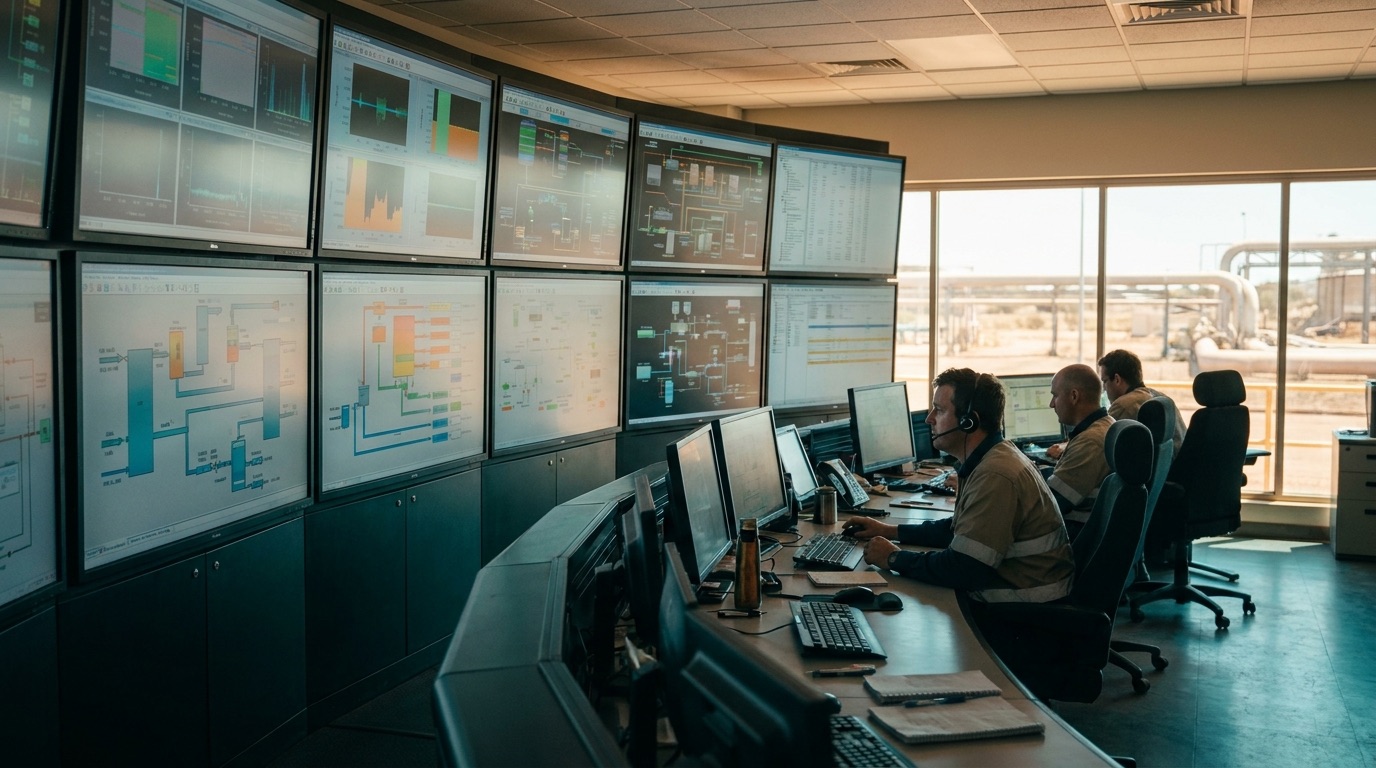
When envisioning a smart port, you might imagine a futuristic landscape involving towering robotic cranes, autonomous carriers, forklifts and container yard trucks gliding effortlessly across the terminal. Most probably, all this activity is efficiently managed by an intelligent operations centre using advanced tracking, asset management and logistics systems.
A smart port brings digital transformation to life, where operations are synchronised, movements are streamlined, and efficiency, safety and sustainability are continuously optimised through the integration of IoT, AI and digital twins.
Creating a smart port is big business. According to the Smart Ports Global Market Report 2024, the smart ports market is projected to grow from $4.85 billion today to $16.91 billion by 2030, a compound annual growth rate of 21.8 per cent. In the Asia Pacific region alone this value is expected to grow from USD 1.68 billion in 2024 to approximately USD 15.93 billion by 2034, at a CAGR of 25.26 per cent, mainly driven by investment in China and India. These trends indicate a robust global shift towards smarter, more efficient and sustainable port and logistics operations, with the Asia-Pacific region leading the transformation.
In Australia, emerging leaders in port authorities are embracing relevant emerging technologies. Ports such as Brisbane, Fremantle, Botany and Melbourne are transforming into smart, sustainable and resilient hubs, ensuring long-term viability in an increasingly digital and eco-conscious world.
Key Drivers for Smart Ports
Digital transformation in ports is being propelled by three interconnected forces:
- Technological innovation. Advances in IoT, digital twins and AI are revolutionising port operations, enabling real-time tracking, predictive maintenance and smarter decision-making. These technologies support greater visibility across assets, improve logistics flow and enhance port safety and resilience. With rising cybersecurity threats, robust digital security is now a foundational requirement in all technology deployments.
- Supply chain optimisation. Global pressures to streamline logistics, reduce delays and increase transparency are driving smart port initiatives. Intelligent systems support dynamic berth allocation, automated equipment scheduling and end-to-end container tracking, maximising throughput while minimising inefficiencies.
- Environmental sustainability and climate resilience. Ports are under increasing pressure to meet national and global decarbonisation targets. The integration of renewable energy sources, such as solar, wind and large-scale battery storage, is critical as ports electrify operations. Climate resilience is also a major factor, with smart technologies enabling real-time environmental monitoring and planning for extreme weather events.
The Technologies Powering Smart Ports
The enabling technologies powering smart ports include:
- Internet of Things (IoT). Enables live monitoring of assets, environmental conditions and energy consumption across port operations.
- Artificial Intelligence (AI). Supports advanced analytics for forecasting congestion, automating crane operations and optimising logistics and vessel scheduling.
- Digital twins. Provide a dynamic, virtual model of port infrastructure, enabling scenario testing, long-term planning and better risk mitigation for storms, equipment failure or infrastructure fatigue.
Next-Generation Telemetry with Industrial IoT
The aim of industrial IoT and data connectivity is to provide operations and asset managers with data-driven insights for asset reliability. In trading and industrial ports in Australia, managers in maintenance, operations, asset management and reliability engineering are starting to integrate a range of smart and emerging technologies, such as IoT, AI, augmented reality, automation and scalable cloud-delivered services, to create a fully digitised port facility.
These leaders benefit from using real-time data fed into their asset management systems and 3D digital twins to enhance overall efficiency, productivity, environmental sustainability and growth. While many smart port technologies are large-scale and require long lead times due to their complexity, other smart solutions can be small, cost-effective and rapidly deployable, significantly reducing critical asset failure and downtime.
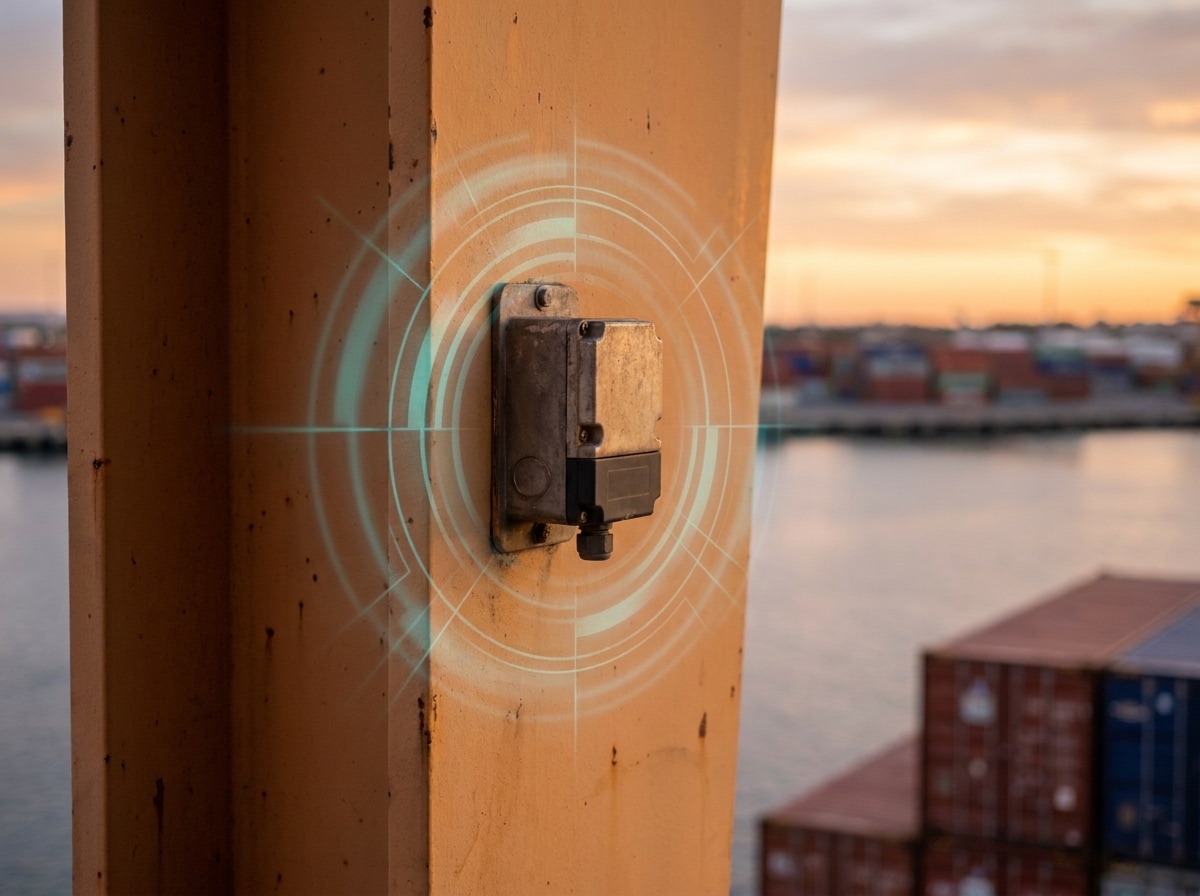
For example, smart sensors, which are relatively small, report 24/7 on machine and asset health, providing asset managers and reliability engineers with quality real-time data. This helps them make informed decisions regarding maintenance scheduling and apply predictive analytics for end-of-life failure projections.
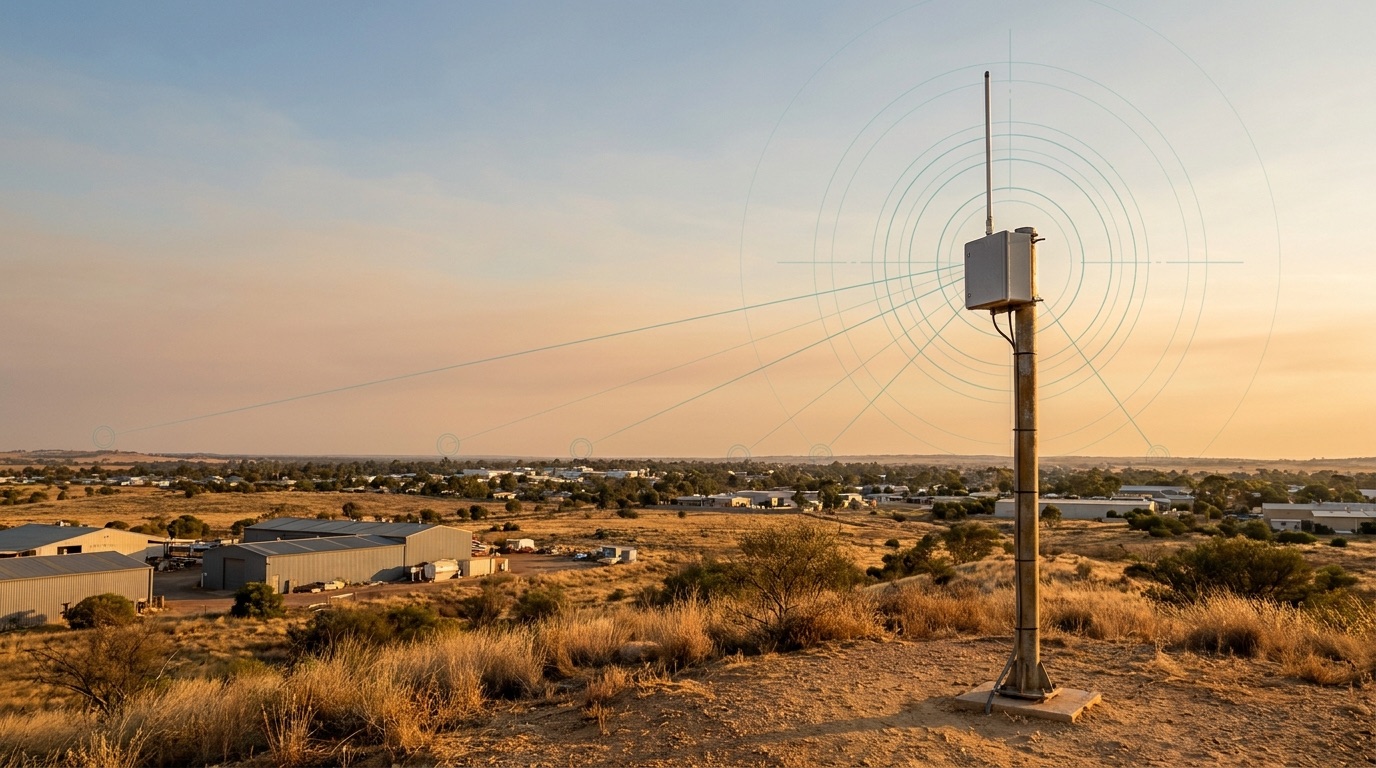
Using low-power, long-range wireless communications such as LoRaWAN, an intelligent remote asset management capability can be deployed in days. Only a few gateways are needed due to the long-range, deep-penetration, line-of-sight capabilities, with both outdoor and indoor gateway options. The sensors do not require power connections, making them easy to fit on machines and assets without disrupting equipment, delaying production schedules or impacting traffic flow across the port. The gateways can also be solar-powered, and the sensors are battery or solar-powered, allowing port authorities to install a zero-carbon communications network that can be relocated as needs change, with data backhauled via cellular, ethernet or satellite.
Smart Port IoT Use Cases
The opportunity for real-time data monitoring using IoT and AI models for predictive analytics is vast. Working with Meshed, port facilities across Australia are already amassing large datasets across a range of use cases, including:
GPS asset tracking
Trucks, loaders, pallets and mobile equipment across the terminal.
Utility metering
Water, gas and energy consumption across port operations.
Control room occupancy
Live occupancy monitoring across operations centres.
Voltage and vibration
Machine voltage and vibration on motors, drives and rotating plant.
Rail heat and stress
Rail track temperature and structural stress monitoring.
Corrosion monitoring
Cranes, wharves, jetties and pier structures.
Dust and spray pressure
Dust levels and water sprayer pressure monitoring.
Tank and level sensing
Water, tank and liquid container levels.
Environmental monitoring
Tidal levels, wind, rain, air quality, salinity and noise.
Alignment to ESG and the UN Sustainable Development Goals
By integrating IoT and AI technologies, ports and coastal operations can significantly advance their Environmental, Social and Governance objectives. Real-time monitoring of air and water quality, energy use, vessel emissions and biodiversity enables more sustainable environmental practices and regulatory compliance. AI-driven analytics help optimise logistics, reduce congestion and lower carbon footprints, while also improving safety, transparency and stakeholder engagement.
Smart port innovations align strongly with the United Nations Sustainable Development Goals, making digital transformation a key enabler of resilient and future-ready infrastructure. The most relevant goals include SDG 7 (Affordable and Clean Energy), SDG 9 (Industry, Innovation and Infrastructure), SDG 11 (Sustainable Cities and Communities), SDG 12 (Responsible Consumption and Production), SDG 13 (Climate Action) and SDG 14 (Life Below Water).
Case Studies
Southern Ports (Albany, Bunbury, Esperance)
Southern Ports is setting a national benchmark in smart port innovation and digital coastal infrastructure by integrating data-driven decision-making across its asset management framework. Through a comprehensive port-wide digital transformation initiative, the organisation is deploying IoT, GIS and digital twin technologies to fully digitise and manage assets across its facilities in Albany, Bunbury and Esperance.
Meshed has supported this transformation from inception, enabling 24/7 asset visibility through the deployment of hundreds of sensors. The real-time data from these devices is seamlessly integrated into Southern Ports' ESRI-based digital twin platform, offering powerful spatial insights into asset condition and performance. Critical success factors have included asset tagging with spatially referenced data, GIS visualisation paired with IoT sensors, condition monitoring of end-of-life asset fatigue, predictive analytics using AI and machine learning models, digital twin scenario testing, and integrated cost modelling that aligns ERP and BI systems for accurate financial forecasting.
Global Steel Manufacturer
Meshed is currently leading a large-scale digital asset management initiative involving the deployment of thousands of mission-critical vibration sensors across steel manufacturing port facilities in Australia, New Zealand and the wider Asia-Pacific region. These LoRaWAN-enabled sensors are installed on a variety of industrial equipment, including AC and DC motors, synchronous drives, hydraulic systems and autonomous robotics, to enable early detection of mechanical faults and prevent unplanned downtime. Data from these sensors is seamlessly integrated into the ports' connected asset management and digital twin platforms via systems such as the AVEVA PI System.
Major Riverside Cruise Ship and Ferry Precinct
In parallel, Meshed has enhanced operational intelligence at the Northshore cruise ship terminal by installing Meshed nCounter people counting sensors across the riverside precinct. This real-time data provides landowners and property managers with valuable insights into peak visitor flows, enabling more effective planning of events, staffing and trading hours, and ultimately supporting local economic development. The precinct is also using LoRaWAN for solar street lighting controls, public waste bin level sensing, weather stations and river level monitoring.
Critical Success Factors
Establishing a smart port requires more than just adopting new technologies. It involves a holistic approach to digital transformation that ensures long-term value, resilience and stakeholder alignment. The key success factors are:
- Data management and integration. Conduct a comprehensive data audit of all assets, establish a clear data governance framework, prioritise integration with enterprise systems such as ERP, GIS, SCADA and asset management platforms, and develop open data policies where appropriate.
- Cybersecurity and compliance. Meet critical infrastructure regulations such as the SOCI Act and embed cybersecurity best practice into operations and vendor management.
- Interoperability and open standards. Avoid vendor lock-in by adopting interoperable, standards-based solutions such as LoRaWAN, OPC-UA and ISO 55000 for asset management, and support API-driven integration for scalability.
- Asset digitisation and analytics. Digitise all assets with IoT and digital twins to enable predictive maintenance and lifecycle optimisation.
- Leadership, workforce and sustainability. Ensure executive support and cross-sector engagement, build digital capability through training and change management, and use real-time monitoring to meet environmental compliance, support ESG goals and adapt to climate-related risks.
Summary
Intelligent asset management using sensing technologies like LoRaWAN, coupled with AI and machine learning tools, achieves multiple positive outcomes for ports, such as improved efficiencies, increased outputs, reduced congestion and waste, improved safety and compliance, and enhanced energy, resource management and environmental amenity.
Port managers and leaders are reaping the benefits of emerging technologies: shifting from scheduled maintenance to condition-based maintenance, gaining situational awareness from real-time operations data, and using predictive and prescriptive analytics to define accurate thresholds for early warning and understand asset lifespan. IoT and AI are also enabling port authorities to better manage sensitive and dynamic coastal environments, strengthening social licence by enhancing transparency and demonstrating responsible stewardship of local ecosystems.
Organisations beginning their digital transformation journey can benefit from understanding how real-time data informs better decision-making. Drawing on over a decade of experience delivering enterprise-grade IoT and AI across Australia, the Asia Pacific and the US, and supporting over 70 local government LoRaWAN networks, Meshed has initiated many first-of-a-kind secure and scalable real-time data monitoring deployments.