
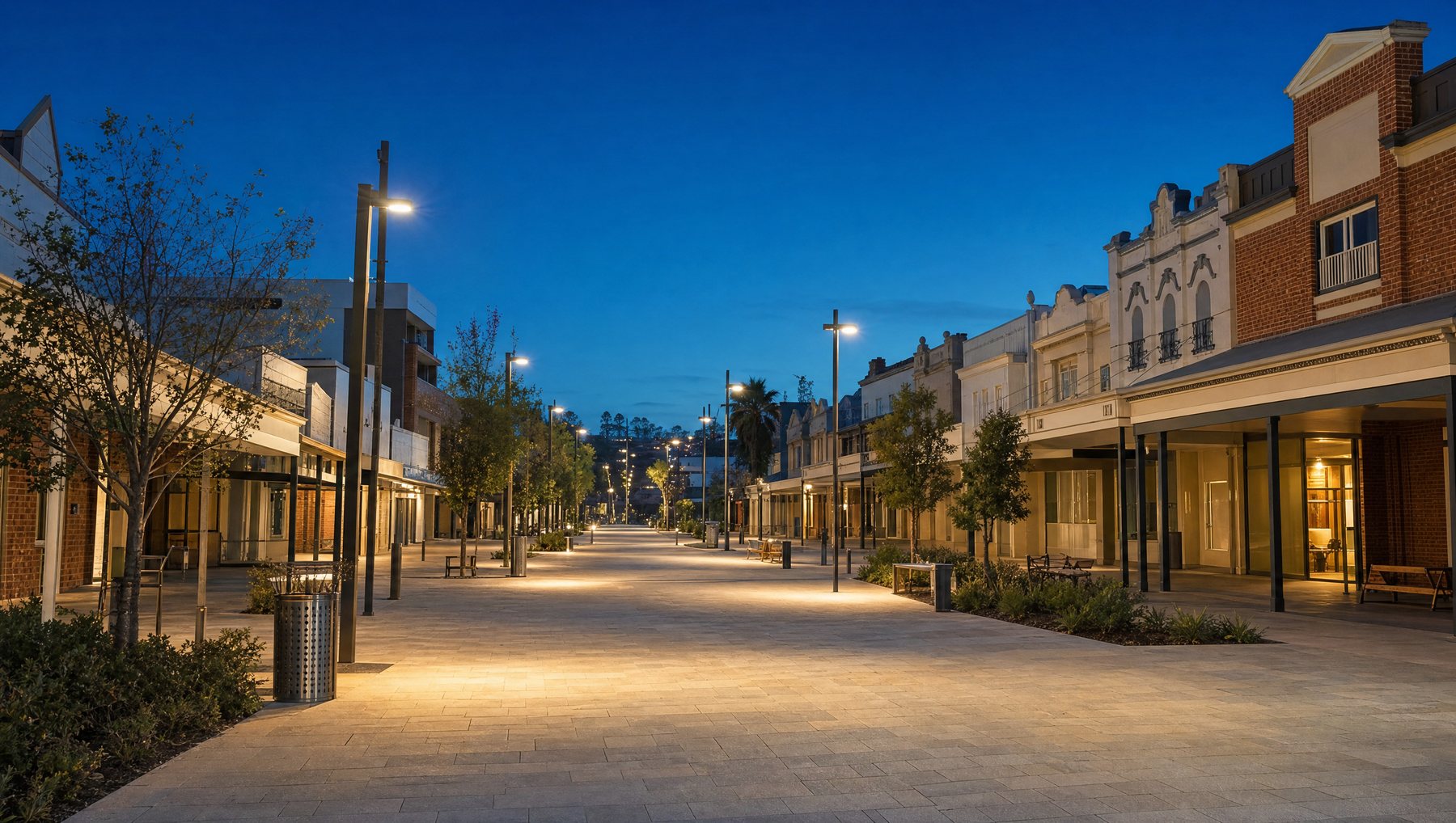
The usual pattern for a council is that each smart initiative arrives with its own connectivity attached. The lighting vendor brings one system, the waste vendor another, the energy monitoring a third. Each works. None of them share anything, and the fourth project costs as much as the first.
Ipswich inverted the order of operations, selecting the connectivity layer first in partnership with Meshed, then treating each application as something that plugs into it.
What that bought
Three primary gateways cover the city. On that foundation the council deployed 55 smart lights, 56 smart bins and 29 smart power meters and switchboards.
The counts are worth reading carefully. No individual application in that list is large. What is notable is that four distinct application types run over three gateways, which is only possible because the connectivity decision was made before the application decisions rather than after each one.
Why backbone-first changes council economics
The first project on a shared network is expensive, because it pays for the network. Every project after it is dramatically cheaper, because the infrastructure already exists and the marginal cost is the sensors alone.
That inverts the usual council experience, where each successive project costs roughly what the last one did and the business case gets harder rather than easier. It also means the projects that never quite justify themselves individually, like monitoring a handful of remote assets, become viable as additions.
The work made Ipswich an IoT Awards finalist at the time, and it established a model that other councils have since followed, including the Victorian consortium that pooled three grants into one shared network several years later.
More on government IoT.
This work was reported by IoT Hub, Australia's Internet of Things trade publication.
“How Ipswich City Council uses LoRaWAN”, IoT Hub, 7 June 2017.