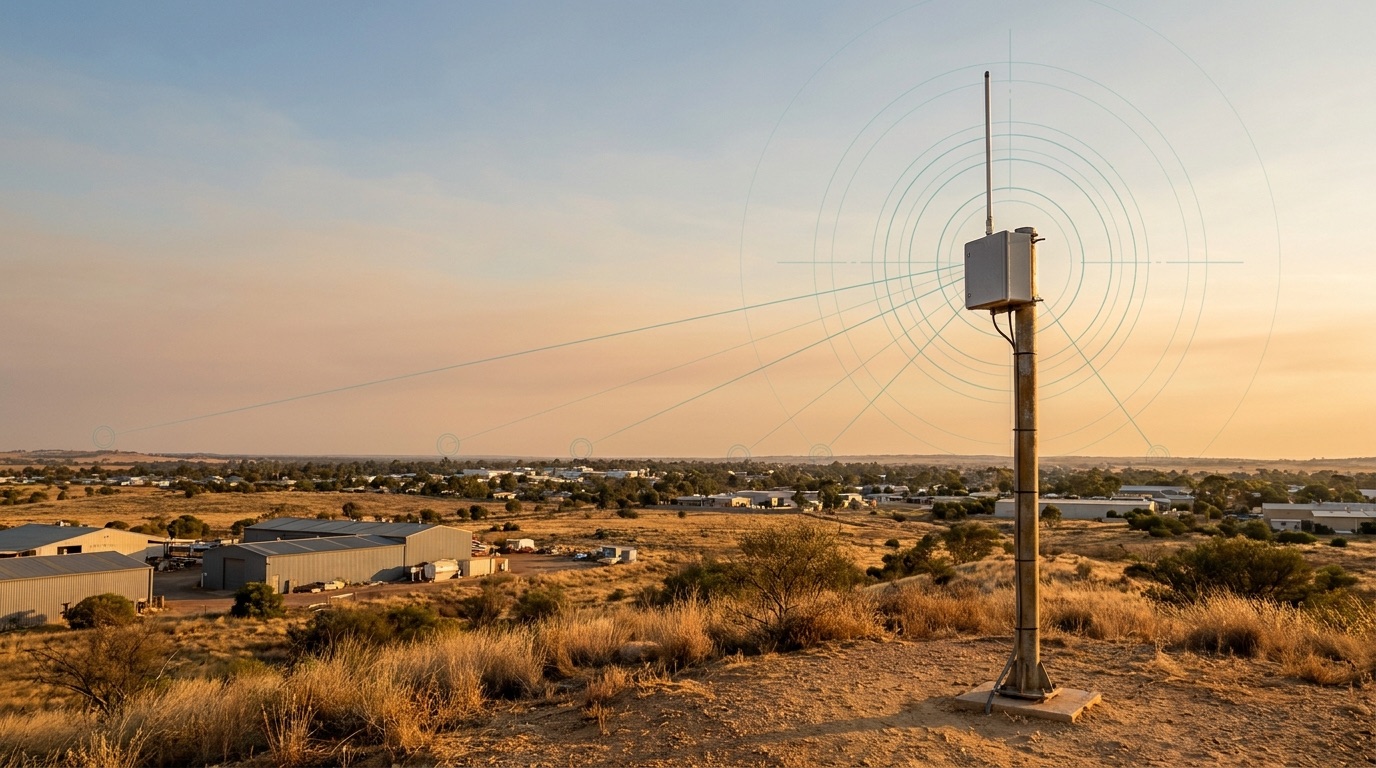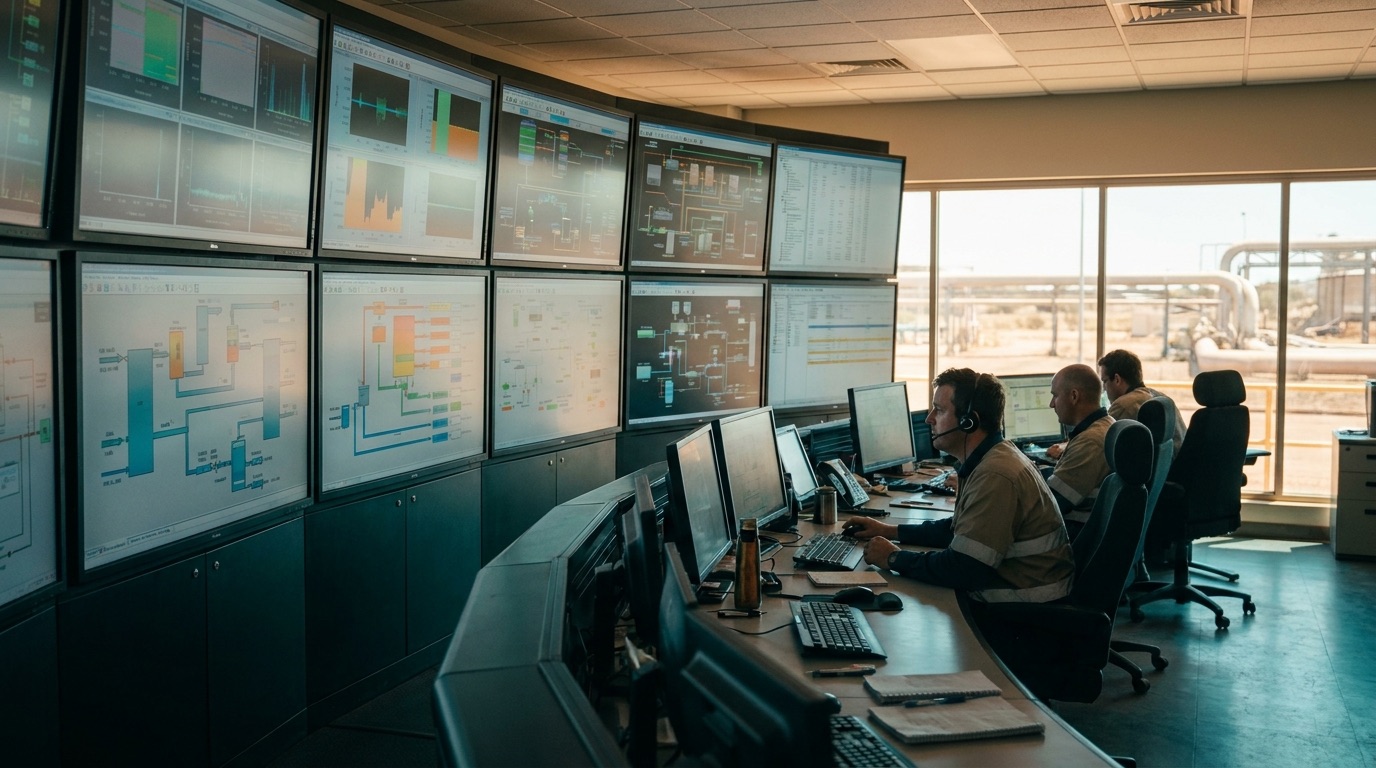
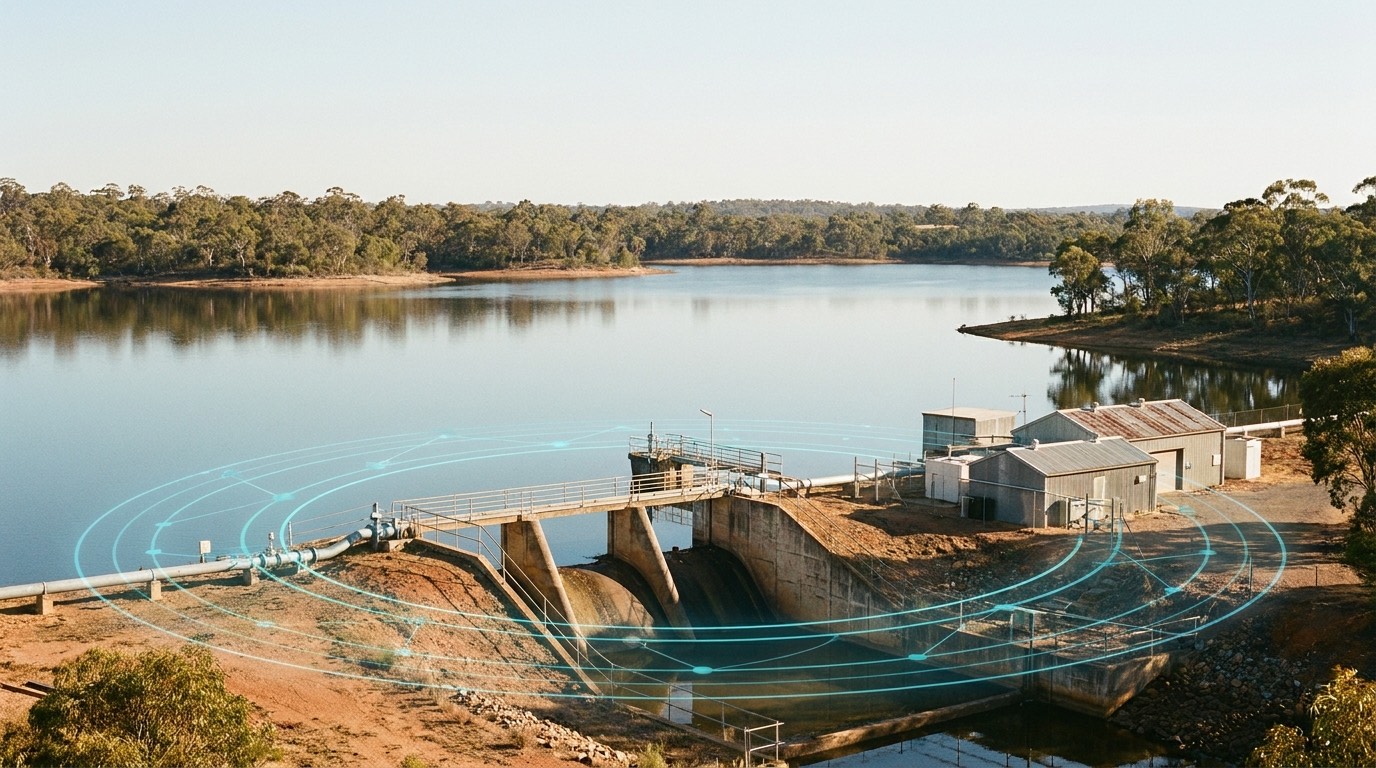
Traditional water telemetry was built to watch a small number of critical assets at treatment plants and pump stations. The rest of the network, the pits, pressure zones, reservoirs, mains and meters spread across whole regions, has stayed largely invisible. That blind spot is exactly where leaks, bursts and metering losses quietly cost utilities millions each year.
This article explains what smart water monitoring is, how LoRaWAN sensing works alongside existing SCADA, and where Smart Water delivers measurable results for Australian utilities and councils, from digital metering and leak detection to flood and water quality monitoring.
The Water Utility Challenge
Traditional water utility monitoring and control systems were historically built around SCADA platforms, RTUs, PLCs and proprietary point-to-point telemetry networks designed to monitor a relatively small number of critical infrastructure assets. While these systems remain essential for real-time operational control of treatment plants and critical processes, utilities are increasingly augmenting and modernising them with LoRaWAN-enabled sensing that provides significantly greater visibility, scalability and operational intelligence across distributed networks.
The gap is the distributed network itself. Assets spread across thousands of square kilometres were never economically reachable by traditional telemetry, and that is where non-revenue water hides: the leaks, bursts and metering losses a utility pays to treat but never recovers.
What Smart Water Monitoring Is
Modern wireless sensing lets utilities deploy thousands of low-cost, low-power sensors for real-time monitoring, predictive maintenance, digital water metering, environmental analytics and AI-driven asset management, at a scale and cost that traditional telemetry was never designed to support.
Meshed delivers enterprise-grade managed LoRaWAN and IoT platforms for the water, utilities and environmental management sectors across Australia. Our secure, scalable managed networks and data platforms let water authorities, councils and utilities deploy real-time digital infrastructure for:
- Digital water metering and leak detection
- Sewer and stormwater monitoring
- Remote asset monitoring and telemetry
- Water quality management
- Flood and environmental monitoring
- Predictive maintenance and operational analytics
Why LoRaWAN Suits Smart Water Networks
LoRaWAN has become a leading connectivity choice for smart water because it delivers reliable, low-power and cost-effective telemetry across large geographic areas:
Long life, low power
Battery sensors run 5 to 10 years, cutting maintenance and operating cost.
Wide-area coverage
Strong across metro, regional and rural, including underground pits, chambers and sewers.
Lower operating cost
Substantially cheaper than cellular telemetry for large sensor fleets.
Open and interoperable
Integrates with SCADA, GIS, ESRI, AMI, ERP, asset management and cloud analytics.
Real-time alerting
Near real-time alerts for floods, sewer overflows, pressure anomalies and pump faults.
Tackling Non-Revenue Water
Non-revenue water, the treated water a utility produces but never bills for, is one of the largest recurring losses in the sector. Continuous sensing attacks it on three fronts:
- Digital metering surfaces continuous-flow and reverse-flow events, abnormal consumption and early leak signals, while improving demand forecasting and billing accuracy
- Pressure monitoring across zones, mains and critical points detects drops, spikes and transient events that drive burst-pipe risk, and helps balance the network during peak demand
- Leak and burst detection using acoustic sensing, vibration analysis and flow anomalies rapidly identifies hidden losses, so field crews can prioritise the repairs that matter
Caught early and trended over time, these signals turn water loss from an annual write-off into a managed, measurable line on the balance sheet.
Real-time visibility across your water network
We design, deploy and manage carrier-grade LoRaWAN networks for Australian water utilities and councils. Talk to the team that has done it at scale.
Where Smart Water Delivers
The same managed network supports a broad range of operational and environmental use cases:
Digital metering and leak detection
Flow, consumption, continuous-flow alerts and reverse-flow events for billing and conservation.
Pressure monitoring
Detect drops, spikes and transients across zones to reduce burst risk and balance the network.
Reservoir and tank levels
Levels, inflow and outflow, turbidity and temperature to optimise storage and quality.
Sewer and overflow monitoring
Wet-well levels, surcharge events and overflow alarms to prevent spills and meet compliance.
Pump station monitoring
Runtimes, vibration, motor current and energy to predict failures and cut energy cost.
Flood and water quality
River and creek levels, rainfall, pH, turbidity and salinity for safety and environmental compliance.
From SCADA to Operational Intelligence
| Traditional system | Traditional purpose | Modern LoRaWAN upgrade |
|---|---|---|
| SCADA systems | Centralised monitoring and control | Cloud analytics, dashboards and real-time operational intelligence |
| RTUs | Remote telemetry from field assets | Low-cost distributed sensor networks and edge telemetry |
| Cellular / radio telemetry | Point-to-point asset communications | Scalable LPWAN, including LoRaWAN |
| Manual pressure loggers | Periodic pressure and flow analysis | Continuous real-time pressure and flow monitoring |
| Traditional AMR meter reading | Scheduled or drive-by collection | Real-time digital metering and customer analytics |
| Reactive maintenance | Responding after equipment failure | Predictive maintenance using AI and real-time telemetry |
Why Meshed for Connected Water
We deliver and operate the full stack, from rugged IP67 gateways to secure hosted analytics, so your team gets data, not another integration project:
- ✓ Significant utility deployment experience
- ✓ Carrier-grade managed LoRaWAN infrastructure
- ✓ Wide range of industrial-grade sensors
- ✓ Multi-vendor integration with end-to-end encryption
- ✓ Secure hosted analytics and dashboards
- ✓ GIS, SCADA, digital twin and predictive-maintenance integration
The MeshedX LoRaWAN Network Server runs on government-certified AWS infrastructure in Sydney for in-country data sovereignty and support, with 99.9% uptime and flexible LTE, ethernet and satellite backhaul. Clients retain full ownership of their data from day one.