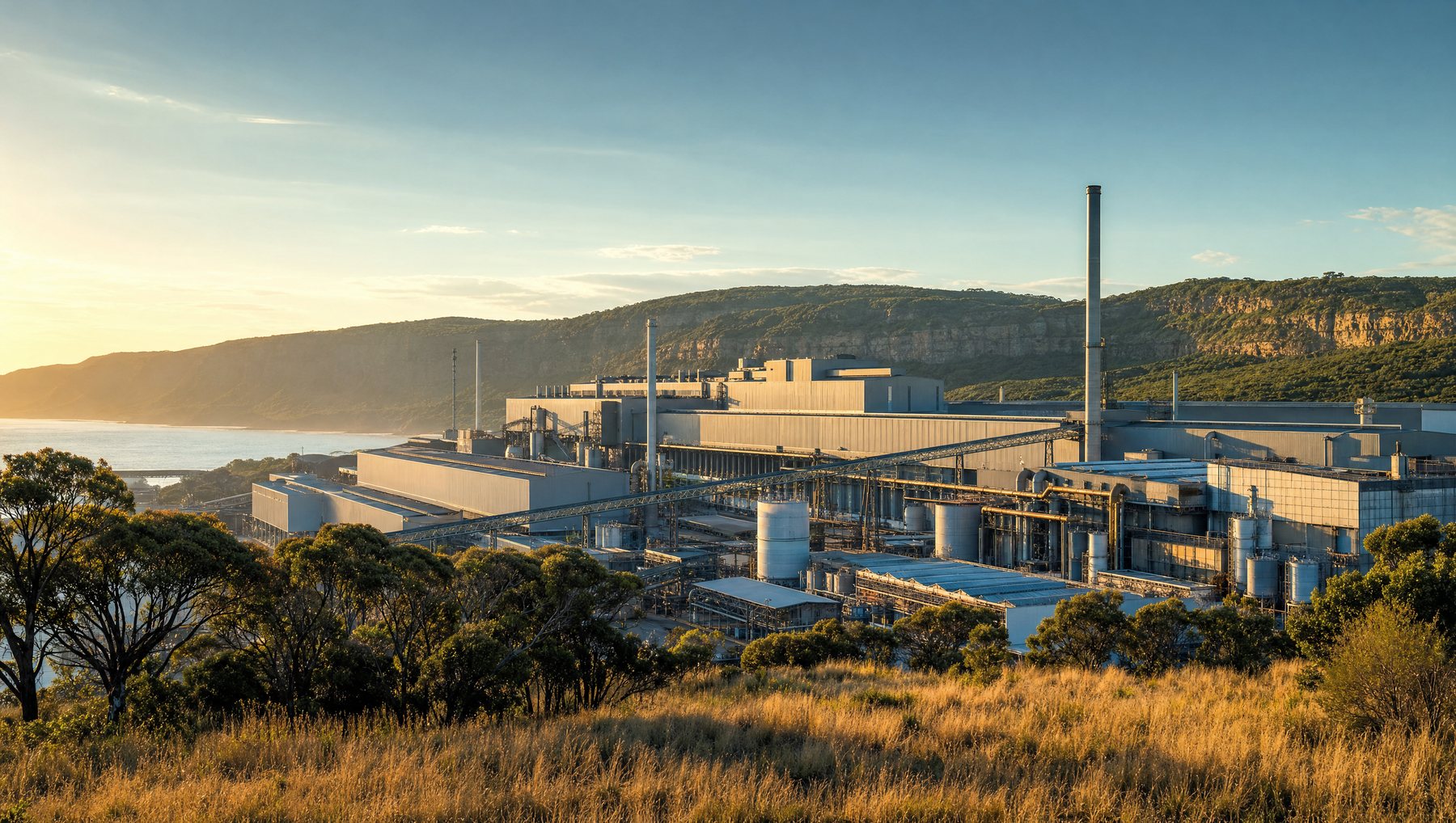
Digital transformation at BlueScope is aimed at three things, staying competitive, improving customer experience and reducing its carbon footprint. Underneath all three sits the same requirement, which is granular real-time data about how the plant is actually running, detailed enough to inform predictive maintenance and intelligent asset management rather than just report on the past.
Getting that data out of a steelworks is the hard part. The scale of the site, the amount of steel in the way and the range of heights at which equipment sits all work against conventional wireless.
Why WiFi stopped scaling at Port Kembla
BlueScope began its sensing programme at Port Kembla using WiFi to reach its devices. The constraint appeared fast.
According to Colin Robertson, Digital Transformation Manager for Asset Management at BlueScope ASP Manufacturing, the size of the facility combined with the range of heights at which devices were located significantly limited both the range and the number of devices each base station could support. In a plant that size, adding coverage by adding access points is an expensive way to solve a problem that is really about propagation.
The company then worked with the nearby University of Wollongong SMART Infrastructure Facility to explore alternative wireless technologies, and determined that long-range low-power networking was the better fit. It went looking for a vendor and engaged Meshed to supply and support it.
What was deployed, and how it grew
Meshed initially supplied four gateways for the Port Kembla steelworks. That footprint has since been extended into a set of networks spanning the business.
Networks now run at NZ Steel, NS BlueScope in Thailand and North Star BlueScope in North America, alongside Australian facilities at Western Port in Victoria and Erskine Park in Sydney. Meshed designed and implemented all of them and retains an ongoing role in expansion and device supply.
The device counts show where the programme sits. About 1,200 devices are connected at Port Kembla and about 50 at Western Port, with a further 500 expected across the two sites inside six months. Thailand runs a similar number to Western Port, and New Zealand about 50 with plans to grow. Robertson identified another six Australian plants and a similar number in North America as candidates for deployment.
What sits on the network
The applications are the ordinary business of running heavy plant, being vibration, temperature, level and pressure monitoring, with trending and automated alerts and alarms.
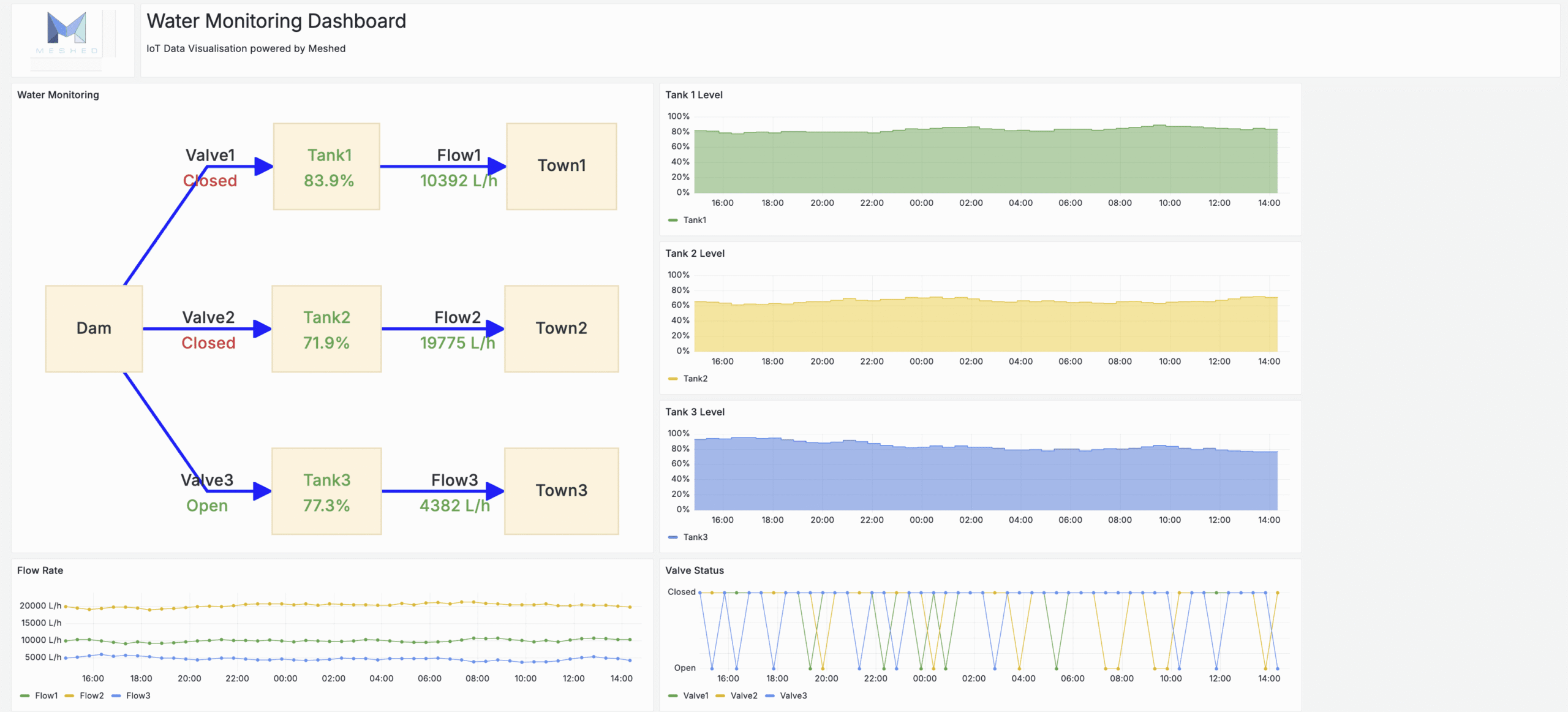
The clearest single example is water metering. BlueScope is moving all the water meters around the Port Kembla site onto the network. As Robertson describes it, instead of somebody walking the site once a month taking readings, there are now 130 water meters transmitting that data continuously.
That is a small change with a large shape. A monthly manual read gives you twelve data points a year and no ability to notice a leak between them. Continuous metering gives you the consumption curve, which is where both the losses and the savings actually live.
Why adoption stuck
The interesting part of this deployment is not the technology choice. It is that the technology was unfamiliar to the team adopting it, and adoption happened anyway.
Robertson is direct about the starting position, that BlueScope did not have an understanding of the network technology and had to rely heavily on Meshed. What made that workable was removing the integration burden from the customer entirely. Every device is preconfigured before it ships, so it arrives ready to connect.
In his words, that has been a real benefit in getting acceptance of the technology, because it almost becomes plug and play. Meshed also keeps the networks operating as they grow and coverage problems emerge.
The result is a programme that expanded on its own momentum. As Robertson puts it, the potential for the business is significant, it has been proven at Port Kembla and again at Western Port, and experienced maintenance and operations people always want to know more about their plants.
What this pattern means for heavy industry
Most asset-intensive sites have the same three problems BlueScope had. The physical environment defeats conventional wireless. The team that needs the data is not a networking team. And the first use case never justifies the infrastructure on its own.
Solving all three at once is what makes a programme scale rather than stall at pilot. Long-range low-power connectivity handles the propagation problem. Preconfigured devices remove the integration problem. And once the network exists, each additional use case, whether that is water metering, temperature or pressure, costs a fraction of the first one.
More on heavy industry asset monitoring · smart manufacturing.
This deployment was documented by IoT Hub, Australia's Internet of Things trade publication.
“Meshed deploys LoRaWAN for BlueScope Steel”, IoT Hub, 8 August 2023.
Real-time intelligence across your entire plant.