
Condition monitoring and real-time data across asset intensive operations.
More industries
Solutions
Our established industry solution pages.
Products
Browse the full Meshed product range and web store.
Transform asset data into operational intelligence with wireless condition monitoring, AI-powered predictive maintenance and real-time visibility across your critical infrastructure.
Industrial asset intelligence connecting thousands of assets to smarter operational decisions.
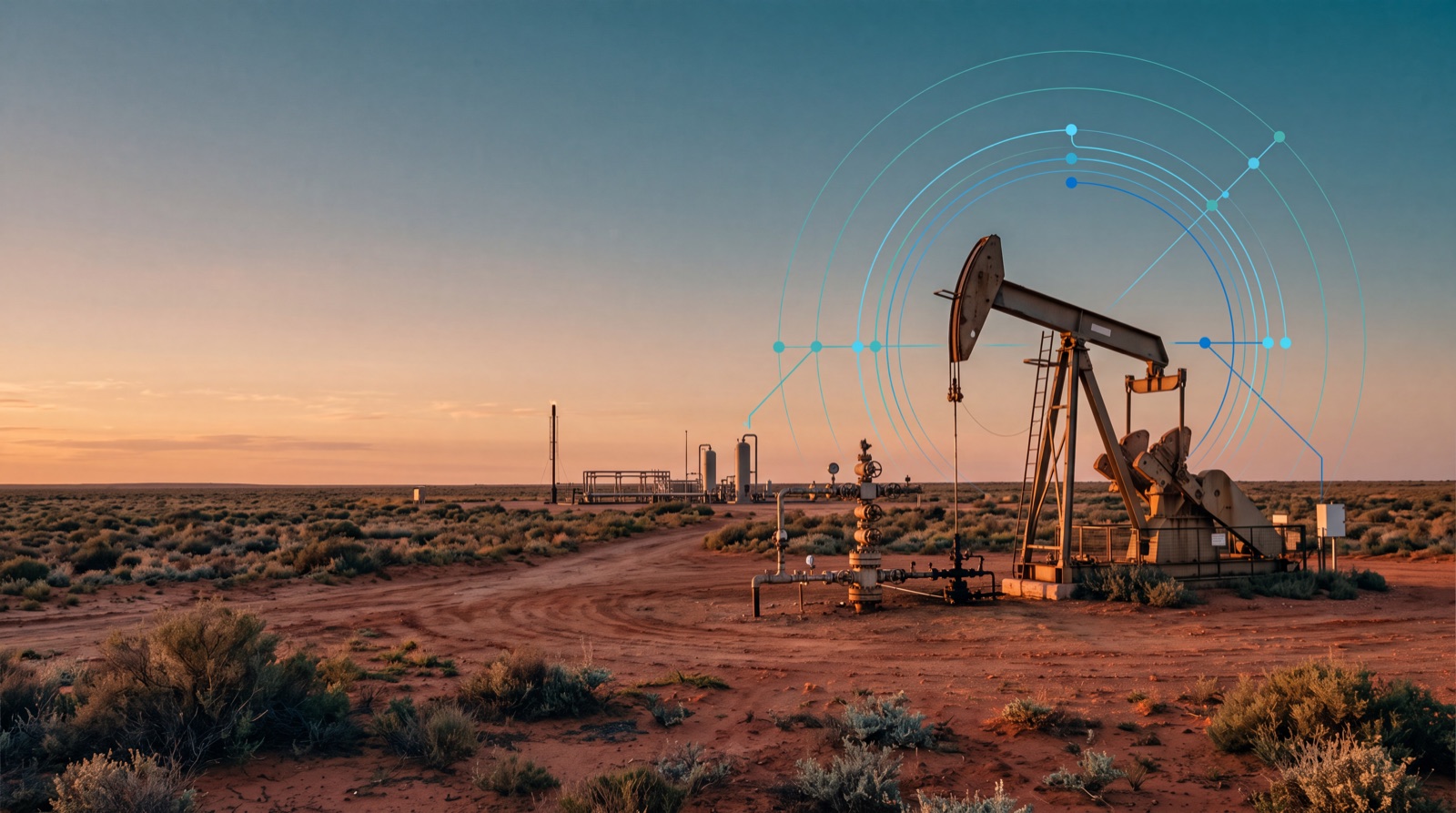
Across upstream, midstream and downstream operations, oil and gas companies manage thousands of distributed assets operating in harsh, remote and hazardous environments. Pumps, compressors, motors, valves, tanks, pipelines and rotating equipment are critical to production, yet many remain unmonitored or rely on scheduled inspections that can miss early signs of failure.
At the same time, operators are under increasing pressure to improve operational efficiency, reduce emissions, extend asset life and optimise maintenance resources while managing ageing infrastructure and a skilled labour shortage.
The challenge is no longer collecting data. It is turning asset data into actionable intelligence that enables better operational decisions.
Costly production downtime.
Environmental incidents.
Increased maintenance costs.
Safety risks for personnel doing manual inspections.
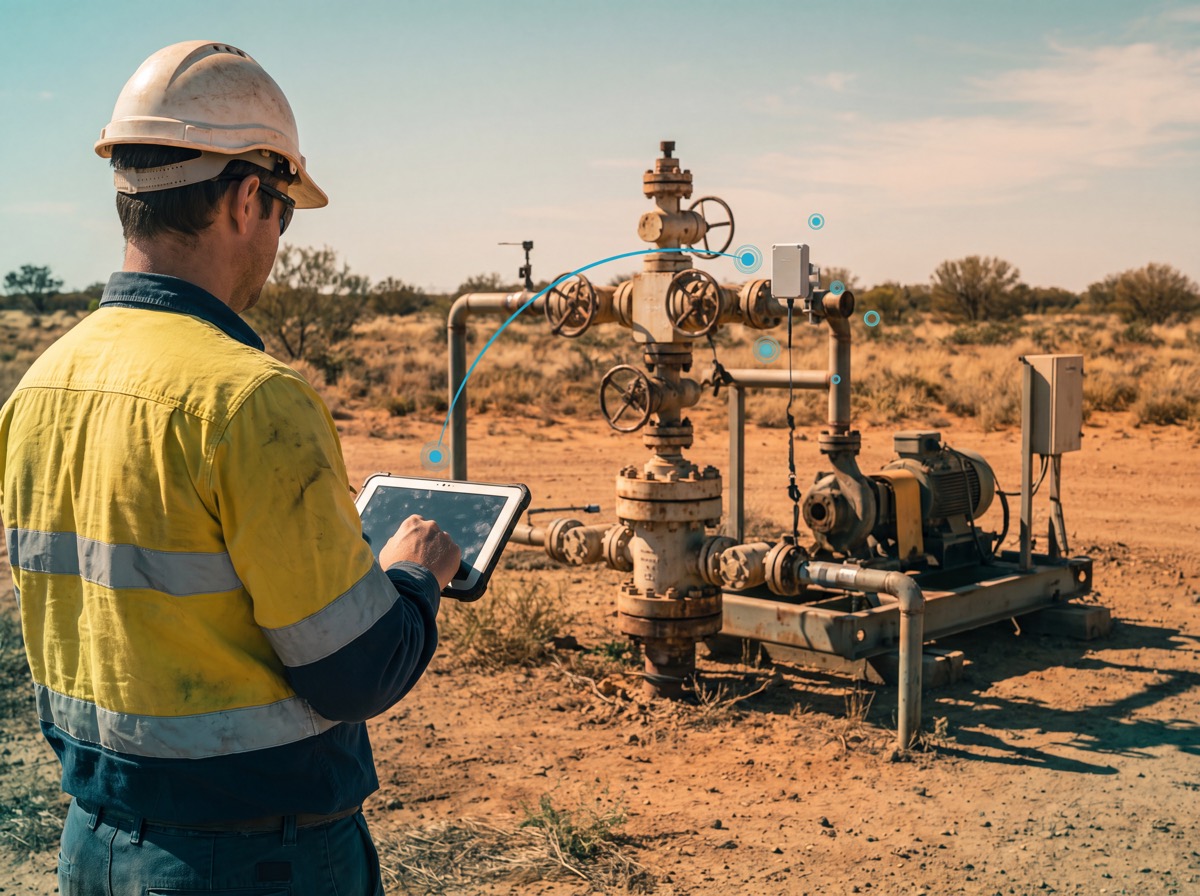
Asset Intelligence combines low-power IoT sensors, secure LoRaWAN® connectivity, AI-powered analytics and predictive maintenance to provide continuous visibility across critical equipment and infrastructure.
By monitoring vibration, temperature, pressure, current, flow, tank levels, leaks and environmental conditions in real time, operators gain early warning of equipment degradation long before failure occurs. AI analytics identify trends, detect anomalies and prioritise maintenance activities based on actual asset condition rather than fixed service intervals.
Unlike traditional monitoring systems, LoRaWAN enables long-range wireless communications across refineries, terminals, processing plants, pipelines and remote well sites using battery-powered sensors that can operate for many years with minimal maintenance. This significantly reduces installation costs while enabling large-scale monitoring of assets that were previously uneconomical to connect.
The result is a safer, more efficient operation with reduced downtime, improved asset reliability, lower maintenance costs and better operational visibility across the entire facility.
Meshed simplifies the deployment of end-to-end Asset Intelligence across upstream, midstream and downstream operations. From sensor selection and LoRaWAN connectivity to dashboards, analytics and enterprise integration, our proven approach helps operators rapidly connect critical assets, improve visibility, reduce manual inspections and make more informed maintenance and operational decisions.
Sensors are installed across critical equipment and infrastructure, including pumps, compressors, motors, valves, pipelines, tanks, wellheads, rotating equipment, electrical systems and environmental assets. Sensors can monitor vibration, temperature, pressure, current, flow, level, leaks, equipment status and operating conditions.
Sensor data is transmitted securely over public or private LoRaWAN networks designed for long-range, low-power industrial communications. LoRaWAN enables cost-effective monitoring across refineries, processing plants, terminals, pipelines and remote production sites without extensive cabling or power infrastructure.
Operational and condition-monitoring data is collected continuously and securely delivered to cloud-based platforms, control environments and analytics systems. This provides greater visibility across distributed and previously unmonitored assets.
Dashboards, automated alerts, condition-based rules, AI analytics and predictive maintenance models help identify abnormal operating conditions, equipment degradation and emerging faults before they result in failure or production loss.
Asset data and insights can be integrated into SCADA, GIS, ERP, EAM, CMMS, Digital Twin and Business Intelligence platforms. This enables maintenance teams, reliability engineers and operations personnel to manage asset performance and prioritise intervention at scale.
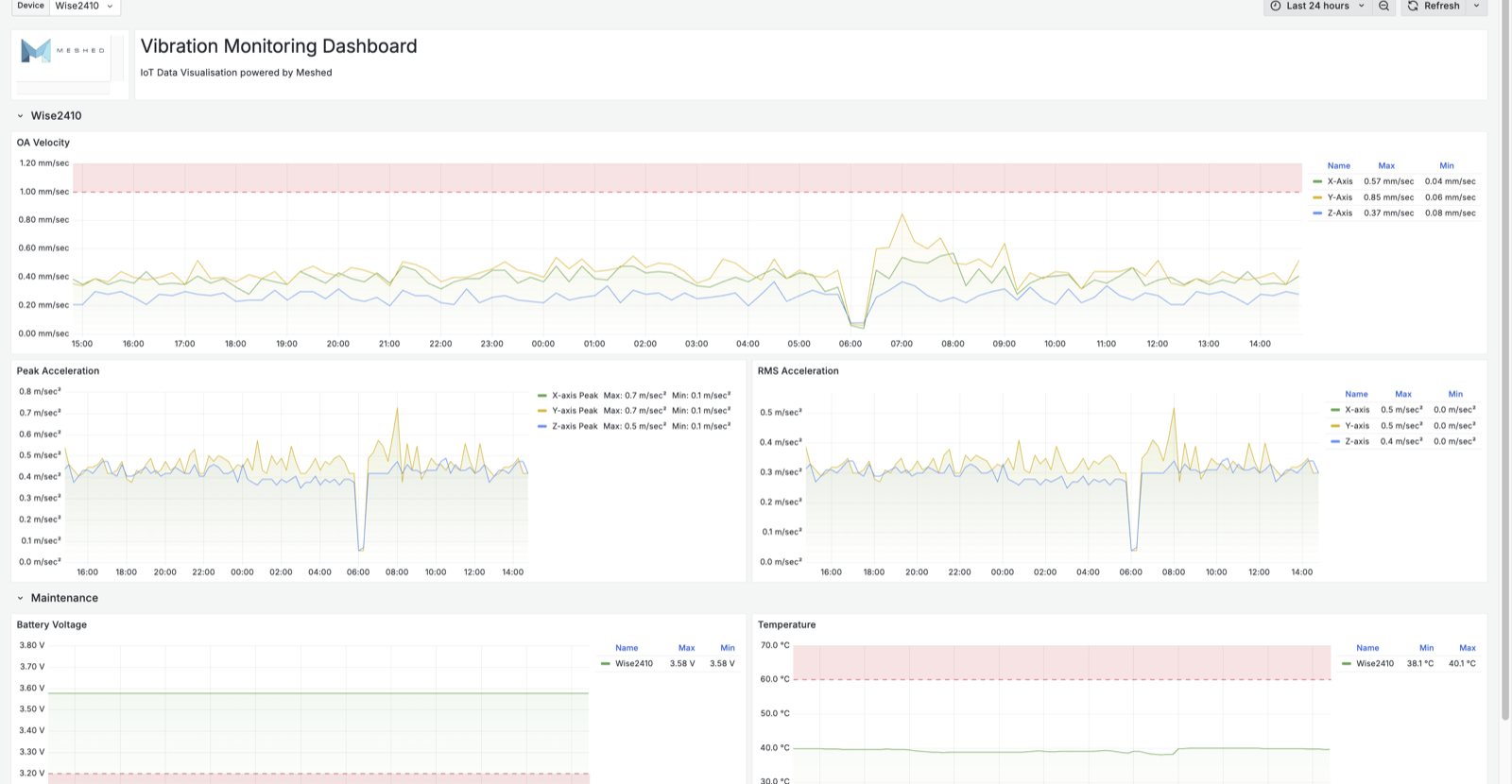
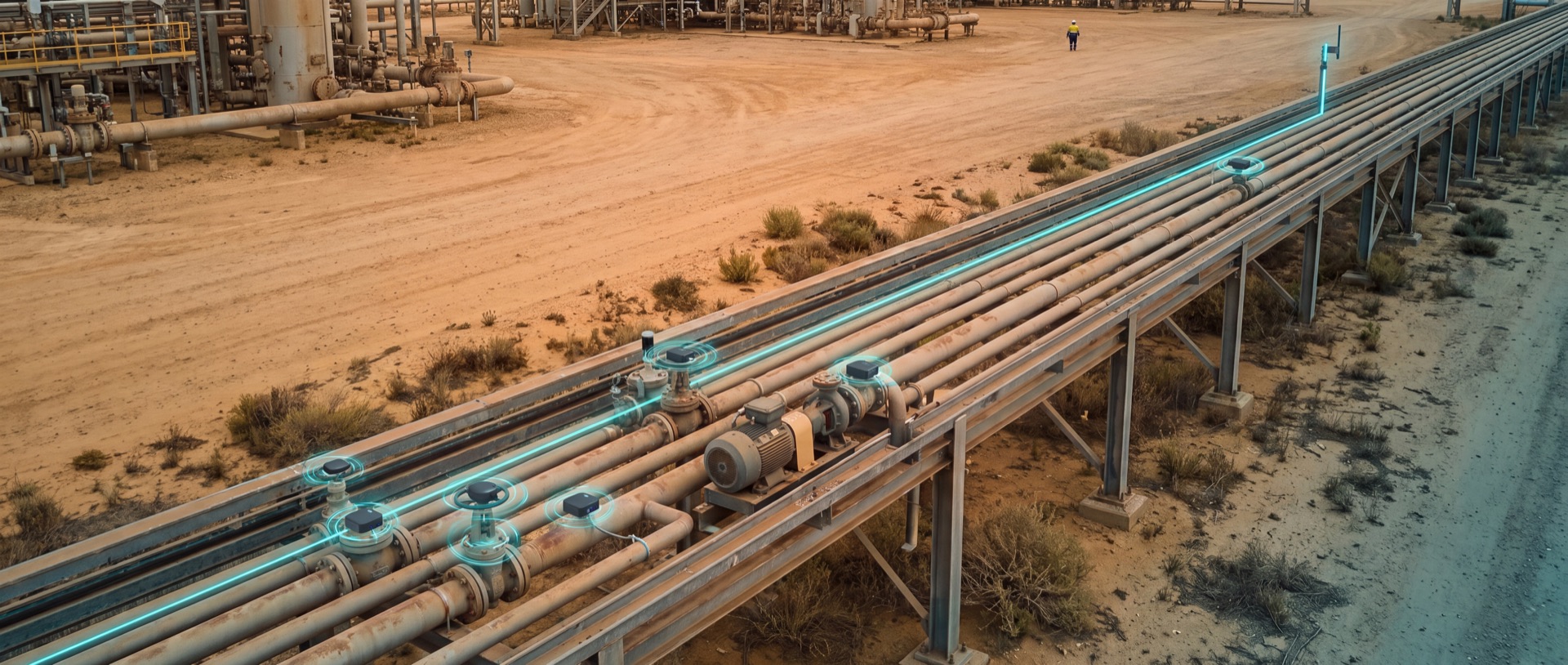
Condition and operating data streams into dashboards, alerts and analytics, so degradation is caught long before it forces an unplanned shutdown.
Pressure alone doesn't tell the whole story. Combining suction and discharge pressure with vibration, temperature, flow and motor data gives a far stronger picture of pump performance and developing failure, right across the transfer process.
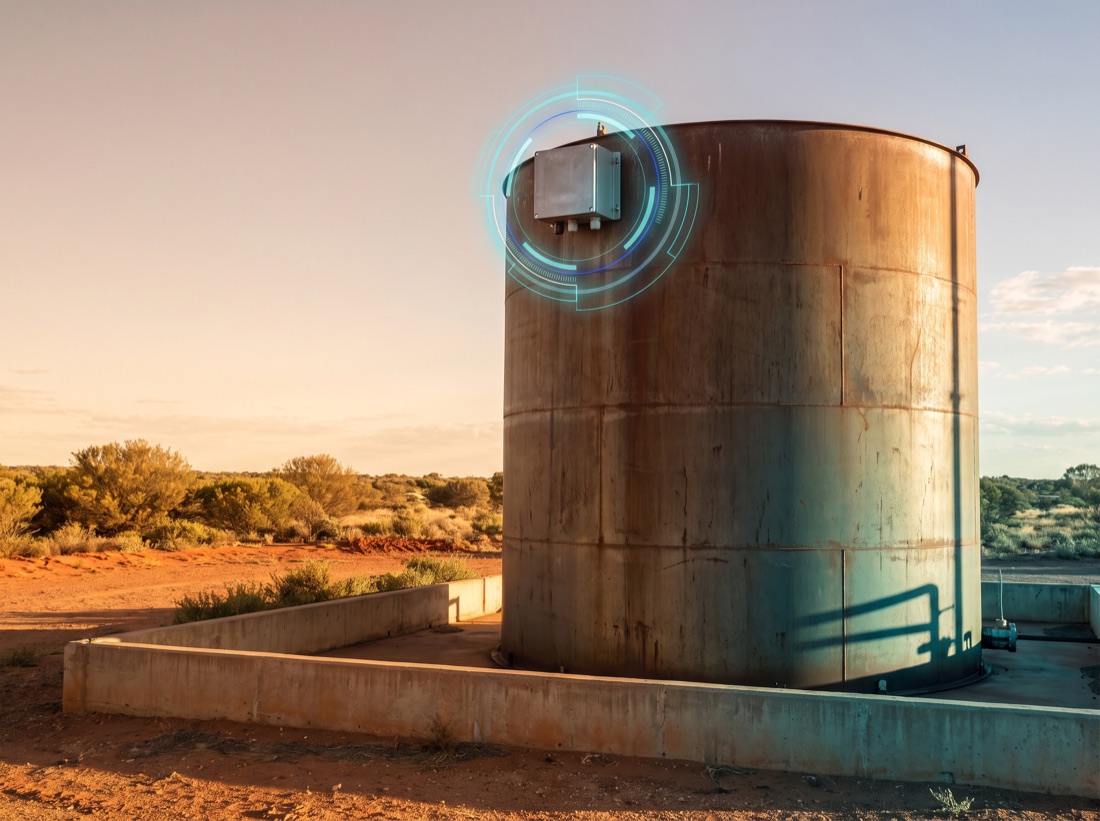
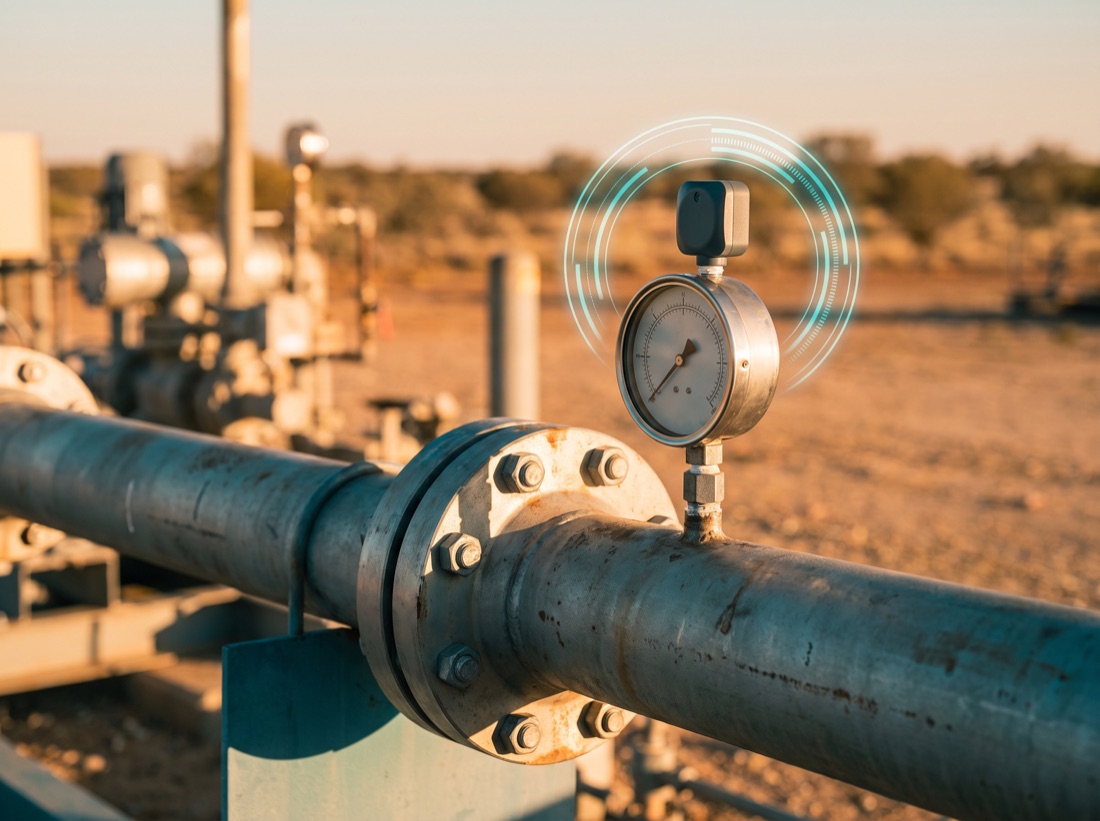
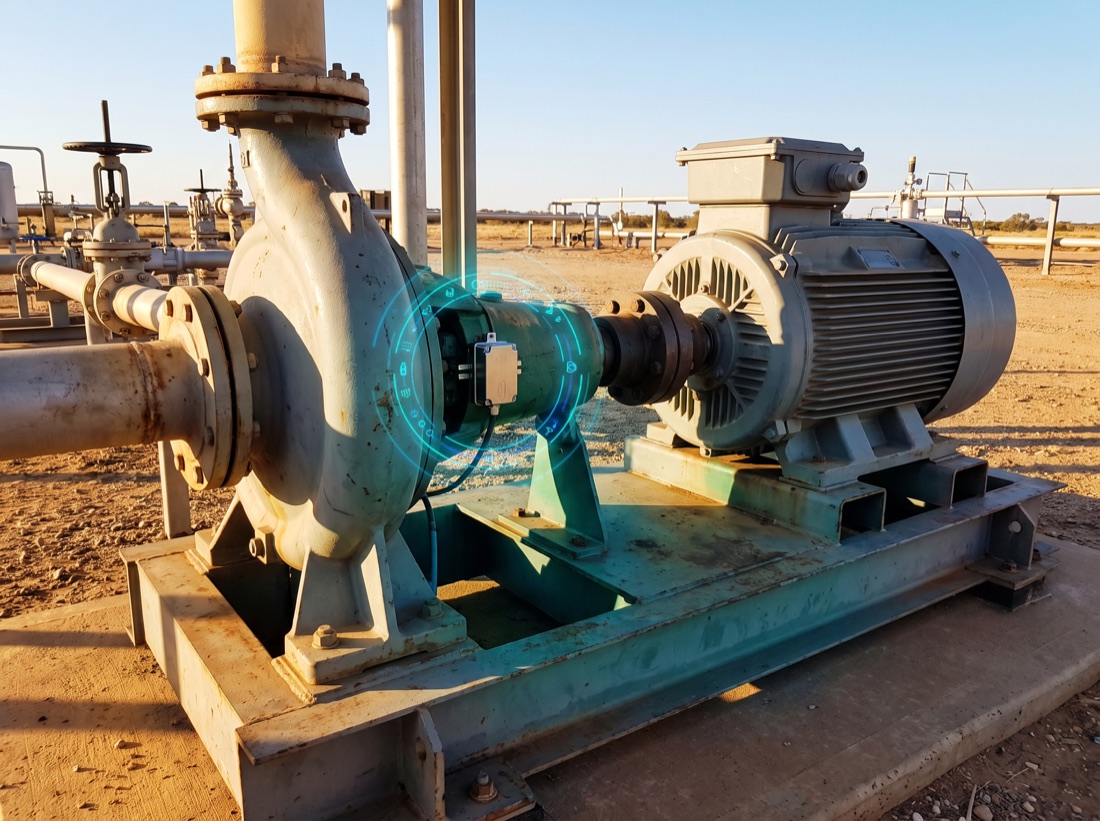
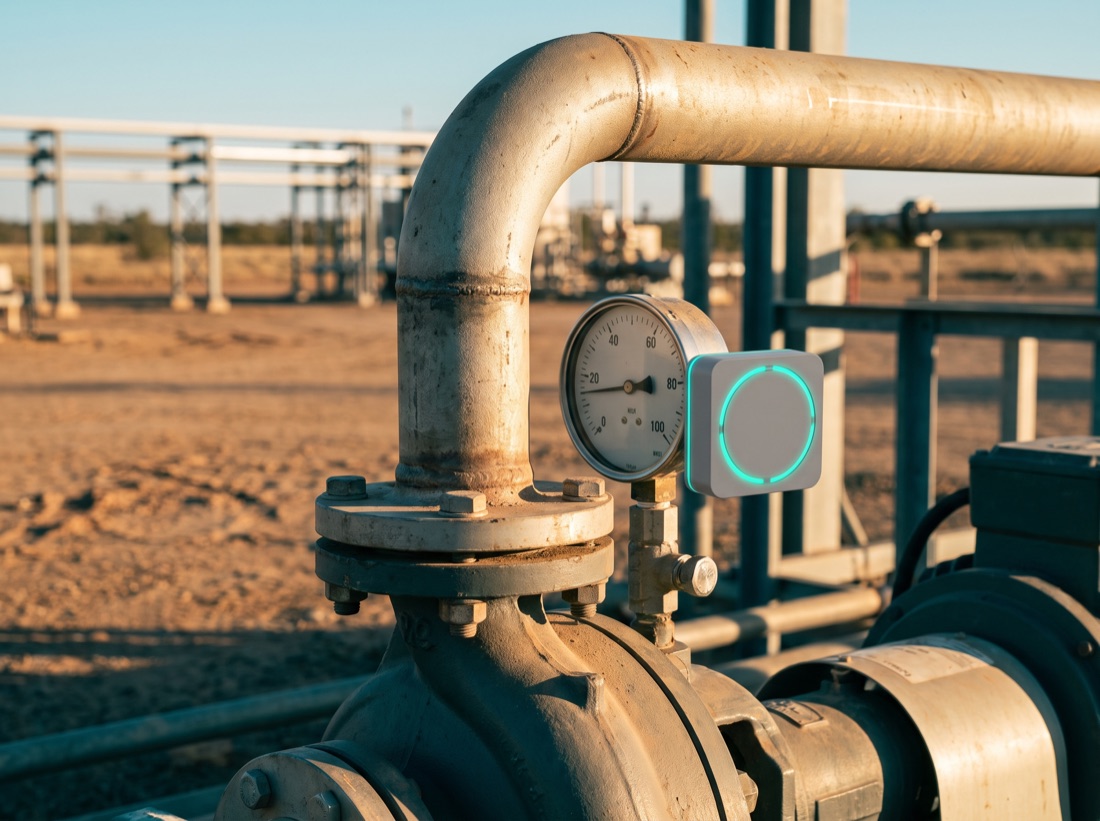
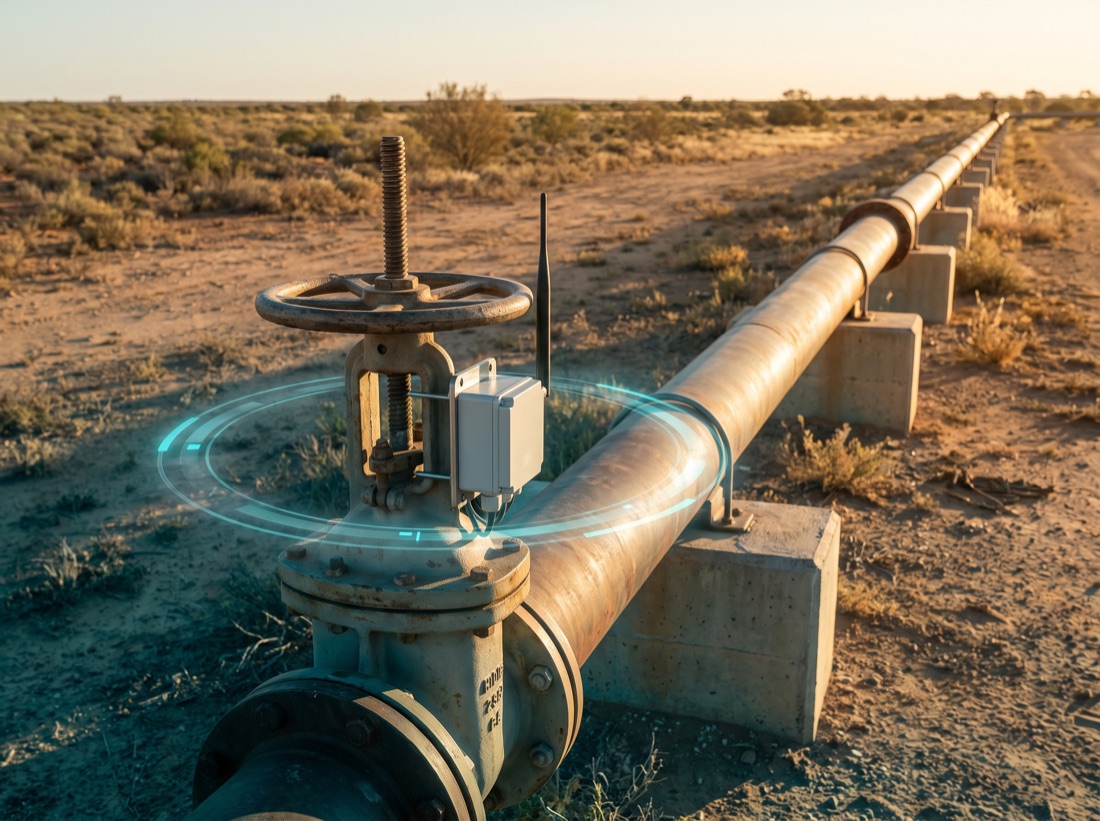
Every monitoring point streams over long-range wireless LoRaWAN to the Asset Intelligence Platform for live visibility, alerts and analysis.
Continuous visibility of pressure, flow and equipment condition.
Identify abnormal conditions early, such as pressure loss, excess vibration or overheating.
Enable condition-based maintenance and reduce unplanned downtime.
Protect people, assets and the environment.
The result is improved asset reliability, reduced unplanned downtime, fewer manual inspections, lower maintenance costs and better visibility across the oil and gas value chain.
Through predictive maintenance.
With continuous condition monitoring.
By reducing manual inspections in hazardous areas.
By servicing equipment based on condition rather than time.
Through early fault detection.
By identifying leaks and inefficient equipment.
Without expensive cabling or power infrastructure.
From a handful of assets to thousands of sensors across multiple sites.
Asset Intelligence can be deployed across the entire oil and gas value chain to monitor equipment, infrastructure and environmental conditions, from rotating machinery to remote wellheads.
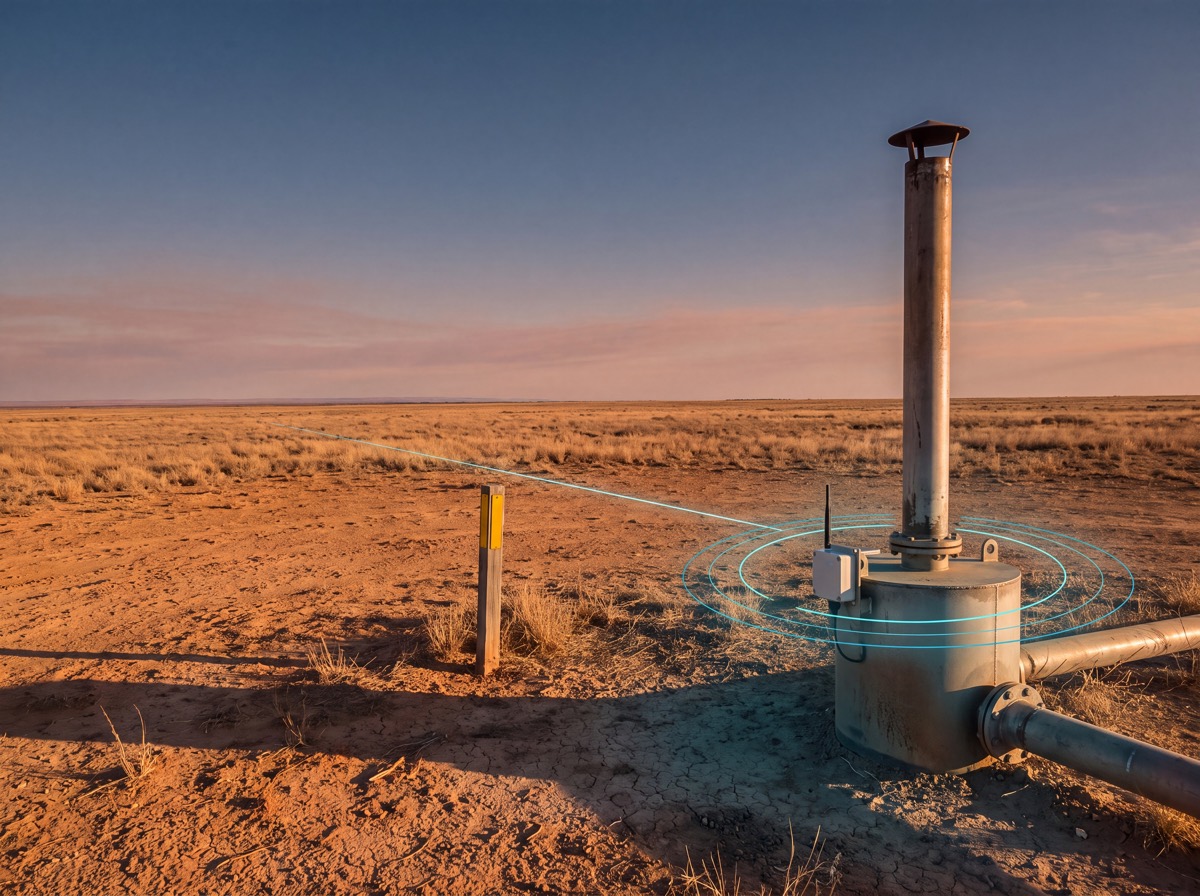
Meshed's proposed Asset Intelligence solution uses battery-powered LoRaWAN sensors and a low-pressure switch to continuously monitor water discharged from High Point Vents (HPVs) across remote gas fields.
When water reaches a predefined level within a small external catch pot, the pressure switch triggers a LoRaWAN sensor to send an immediate alert via the LoRaWAN network.
Operators receive real-time notifications through dashboards or existing SCADA and maintenance systems, enabling rapid response to potential vent failures, reducing manual inspections, improving pipeline reliability and lowering operational costs.
Private and public LoRaWAN® network infrastructure.
Carrier-grade MeshedX LoRaWAN Network Server.
Enterprise edition of The Things Stack.
99.9%+ network uptime SLAs.
End-to-end encrypted communications.
IP67-rated industrial gateways and sensors.
LTE, Ethernet, and satellite backhaul support.
Integration with SCADA, GIS, ERP, CMMS and BI platforms.
AI/ML-enabled predictive maintenance capability.
Wireless condition monitoring across fixed plant, rail and remote infrastructure.
Explore Smart MiningPredictive maintenance and process visibility across the plant floor.
Explore Smart ManufacturingCondition-based maintenance and asset intelligence as a cross-industry solution.
See the solution