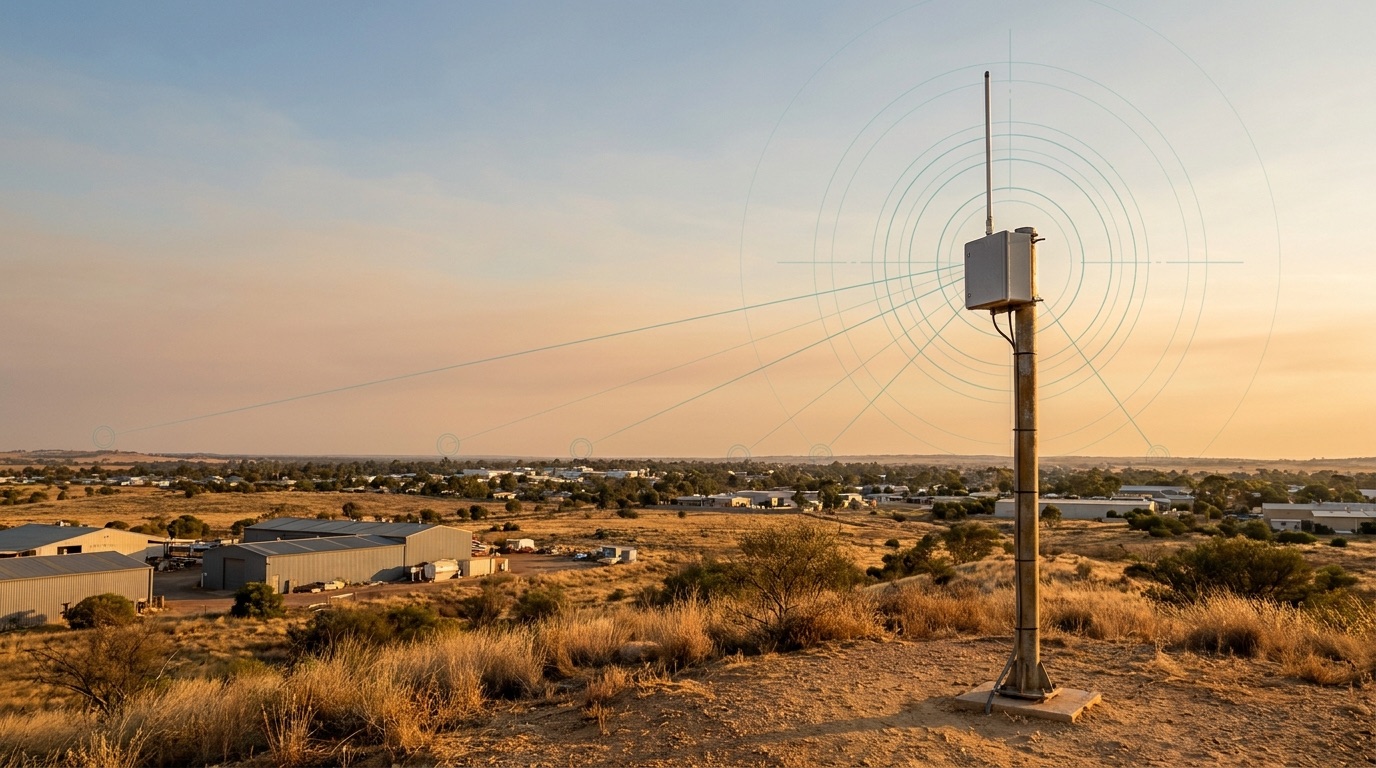

Today, connected sensors and networks quietly monitor infrastructure, buildings, utilities, cities and industrial equipment around the world. The hype cycle moved on, but the technology settled in and became genuinely useful. Physical AI is now attracting the same intensity of attention, and it is worth asking honestly what part of it is new and what part is a new name for an evolution that has been underway for years.
The short answer is that the underlying components are not new. Sensors, PLCs, automation, machine learning, predictive maintenance and connected machines have existed for a long time. What is changing is the combination of those capabilities, and the degree of intelligence, context and autonomy now available to the system.
From Automation to Physical AI
Industrial automation has been sensing and acting on the physical world for decades. A PLC receives a measurement, applies programmed logic and controls a machine. A building management system detects a temperature change and adjusts ventilation. A vibration monitoring system detects that a threshold has been exceeded and raises an alarm. Physical AI does not invent the connection between the digital and physical worlds. What is changing is the intelligence between sensing and action.
Traditional automation generally requires engineers to anticipate conditions and program the appropriate response. AI increasingly allows systems to interpret complex patterns, learn from history, understand context and predict what is likely to happen next. Agentic AI can take this further by pursuing goals, making decisions and coordinating actions. Physical AI brings these capabilities into the assets, machines and infrastructure operating in the real world.
For asset management, that convergence is best understood as a progression. Each stage builds on the one before it rather than replacing it.
Connected assets
See what is happening
Smart assets
Understand what is happening
Intelligent assets
Anticipate what will happen
Autonomous operations
Respond, under human control
The important distinction is not whether a system can sense and act, because automation has done that for decades. It is how the decision is made, how much context the system understands, and ultimately how much authority we are prepared to give it.
A Vibration Sensor Tells the Story
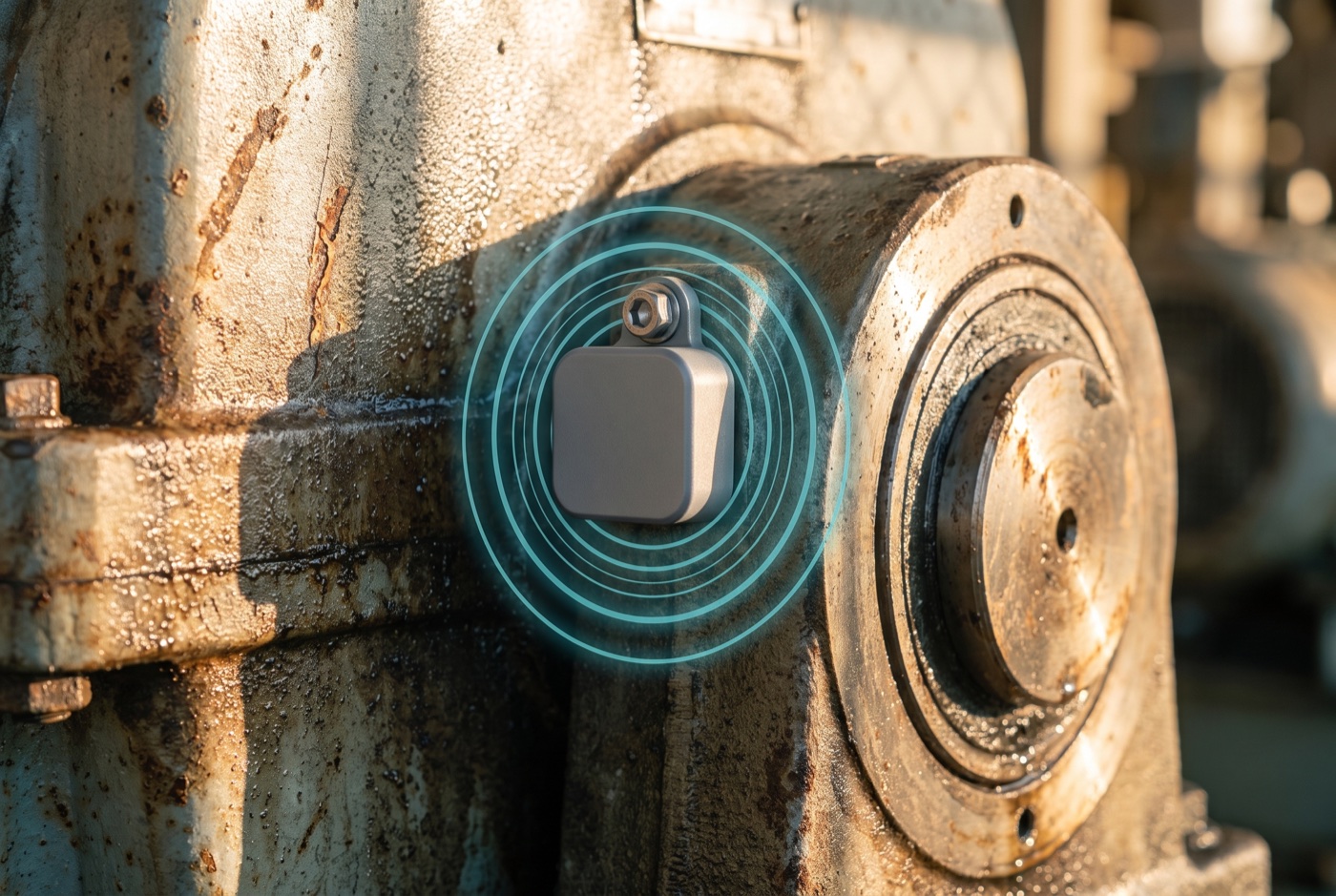
Consider something very ordinary in an industrial environment, a pump fitted with a vibration sensor. The same asset explains the entire progression, one stage at a time.
| Stage | Primary role | What the system says about the pump | The human role |
|---|---|---|---|
| IoT | Connect and measure | Vibration is 8 mm/s. | Interpret the information |
| Automation | Execute rules | Threshold exceeded, generate an alarm. | Define the rules and respond |
| Analytics | Identify trends | Vibration has been increasing for weeks. | Interpret the trend |
| AI | Understand and predict | This pattern is abnormal and consistent with bearing degradation. | Validate the recommendation |
| Agentic AI | Reason and coordinate | Maintenance should be prioritised given the risk and operating context. | Review and authorise |
| Physical AI | Decide and potentially act | Reduce load, transfer duty to Pump B and raise a priority maintenance task. | Govern authority and any autonomous action |
Not every combination of IoT and AI should automatically be called Physical AI. A system that recommends someone inspect a bearing is better described as AI-enabled asset intelligence. A system that understands the operating context and then changes how a machine runs, or initiates a workflow, moves much further towards Physical AI. The line is drawn by how much the system decides, and how much authority it holds.
Where are your assets on this curve?
Most operations are further along than they think, and closer to the next stage than they fear. In one short review we will place your assets on the progression above and name the single highest-value move to make next.
Book a 20-minute asset reviewWhy IoT Becomes More Important, Not Less
An AI system cannot understand the condition of a pump, motor, bridge, transformer or water network unless something provides reliable information about the physical asset. That is why IoT is foundational to Physical AI, not a phase it leaves behind. Sensors become the eyes and ears of the system, and connectivity becomes the nervous system that carries what they observe to where it can be understood.
The future of Physical AI will not only be humanoid robots, autonomous vehicles and sophisticated vision systems. It will also involve millions of relatively inexpensive sensors quietly observing the condition of the world's physical infrastructure. Many of those assets do not need broadband connectivity. Pumps, motors, transformers, valves, tanks and remote infrastructure need small amounts of reliable information collected over long periods, at low power and low cost. That is exactly where LoRaWAN and edge intelligence fit.
The LoRa Alliance now describes LoRaWAN as connectivity that can form a digital nervous system for AI, moving IoT beyond connectivity and visibility towards intelligence and action. The Connected Technology Alliance, which I helped found, is similarly turning its attention to Physical AI and, importantly, to the question of trustworthiness as connected systems move from sensing and understanding towards deciding and acting.
The Numbers Behind the Momentum
A few statistics show both the scale of the opportunity and the level of hype around it.
These numbers tell us something important. Agentic AI is moving quickly, but capability, adoption and genuine business value are not the same thing. The organisations that succeed will be the ones that treat this as an engineering and governance problem, not only a technology purchase.
When Intelligence Becomes Action, Governance Matters
There is an important difference between an AI system being wrong on a dashboard and an AI system being wrong when it has the authority to act. Stanford's 2026 AI Index recorded 362 documented AI incidents in 2025, up from 233 the year before. As AI becomes connected to physical processes, data quality and governance stop being back-office concerns and become operational and, potentially, safety issues.
Trustworthy Physical AI, in my experience, rests on five things. They are less a checklist than the difference between a system you can defend to a regulator and one you cannot.
Trust the observation
Is the physical world being represented accurately? Sensor quality, calibration, connectivity, timestamps, metadata and data lineage all become part of AI assurance.
Understand the decision
Why is the AI recommending this action? Operators need explainability, context, confidence and the known limitations of a recommendation.
Control the authority
What is the AI permitted to do? Organisations need explicit boundaries defining what it may recommend, what it may execute and what requires human approval.
Preserve human capability
Can people challenge or override the system? For mission-critical processes, they need the knowledge, information and authority to operate safely without it.
Continuously assure
Is the system still behaving appropriately? Sensors, models, data and environments change, so performance, exceptions and overrides must be monitored for life.
Click through each of the five principles
The critical principle underneath all five is that human oversight must remain meaningful. Human approval becomes an empty formality if the operator no longer understands the process well enough to challenge the machine.
Physical AI is only as good as the data beneath it
Before a system can decide or act, it has to observe the physical world reliably. That foundation is what Meshed builds.
The Real Significance of Physical AI
For organisations already investing in IoT, automation and asset intelligence, Physical AI may be less of a revolution and more a natural progression of the predictive maintenance journey. If you have already invested in sensing, LoRaWAN, automation and asset data, the Physical AI journey may already have started. The opportunity is to extract another layer of value from infrastructure and data you already possess.
The objective, though, should not be maximum autonomy. The better framework is to work out which decisions should be automated, which should be augmented by AI, and which must remain firmly under human control. The most successful organisations will not be the ones that automate the most decisions. They will be the ones that understand the difference.
We spent the first phase of IoT connecting the physical world so that we could see what was happening. We are now entering a phase where machines can increasingly understand what they are seeing. The challenge, as they begin to act on that understanding, is making sure that humans remain informed, accountable and firmly in control of the decisions that matter. IoT let us see. AI lets us understand and predict. Physical AI increasingly lets systems respond. Decide when machines should act.