
Parkes in New South Wales is well known for the Elvis Festival it hosts every January, which draws thousands of visitors to a town that is normally quiet. It brings substantial cultural and economic benefit to the whole Shire. Accommodation in Parkes and the surrounding towns can be booked up to twelve months ahead.
A Town With an Unusual January
An event of that scale is a planning problem disguised as a good news story. The Shire has to resource amenities, waste, traffic and safety for a population that briefly bears no relation to the one on the census, and then has to demonstrate afterwards that the investment was worth making.
Meshed plays a small but useful part in the preparation and evaluation of each year's festival. That role grew out of infrastructure built for an entirely different reason.
Built on What Was Already There
In 2018, Parkes Shire Council retained Meshed to build a LoRaWAN network for the town. We delivered a secure, low power, long range, open systems data network that now covers the vast majority of Parkes.
It was built with help from the Shire's engineering staff and local electrical contractors, using existing towers, water tank infrastructure and buildings, with the Council providing the resources to host the base stations. Meshed manages the network infrastructure on the Shire's behalf.
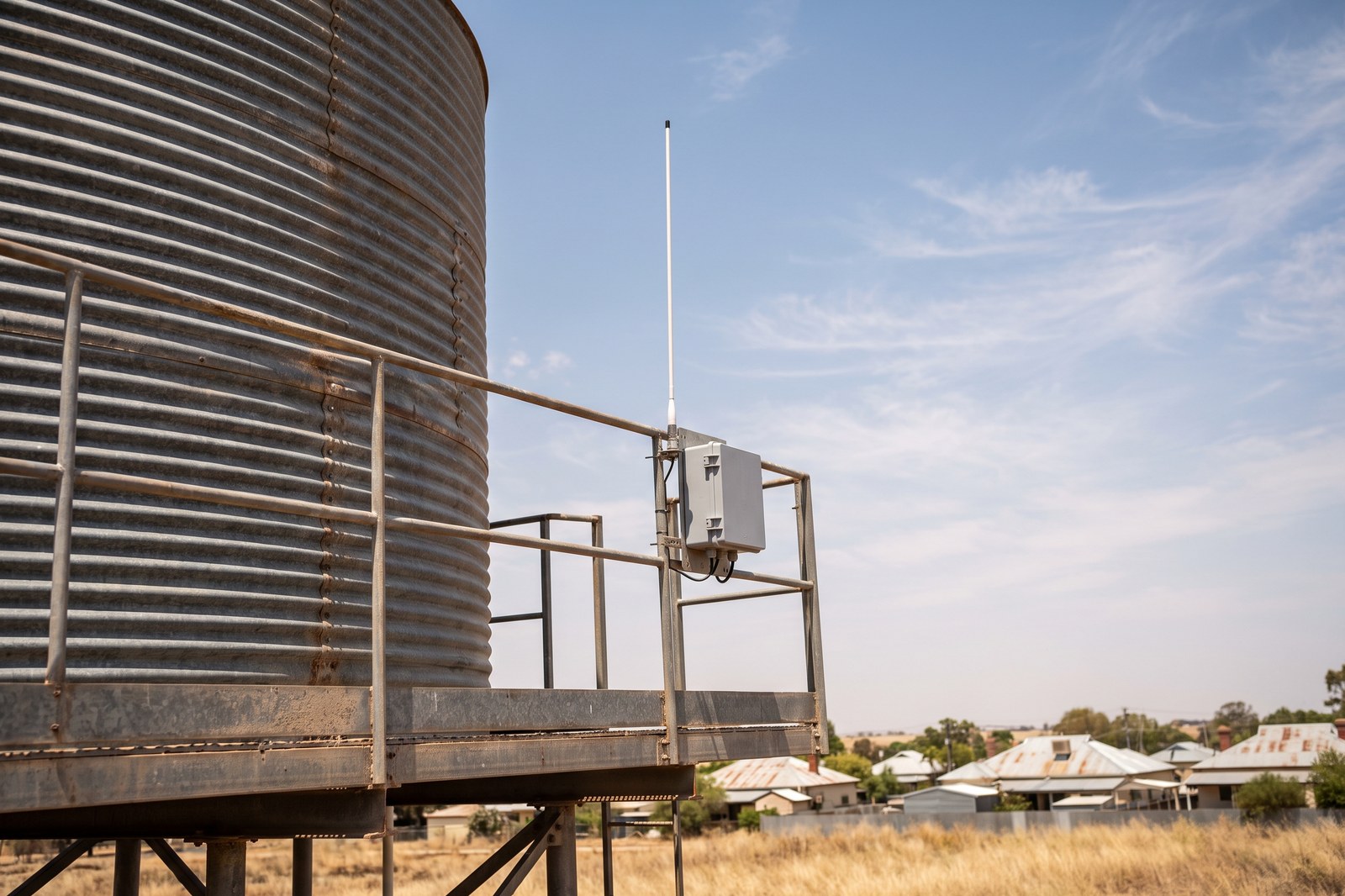
That approach is worth naming because it is the difference between a network a regional council can afford and one it cannot. Nobody built a tower. The coverage came from assets the Shire already owned and already maintained.
Water Metering and Infrastructure
The network supports water metering and other infrastructure monitoring applications across the town. The wireless water meter monitoring project remains in trials, which is the honest position for it.
The network is open for the town to use at no cost to the user, with the aim of creating a community asset for local businesses and for STEM skills development. Regional councils rarely get to offer that kind of resource, and it costs very little once the coverage exists. Latrobe City Council made the same call in Victoria.
Counting the Crowd, Not the People
We deployed nCounter, our people counting solution, to help the Shire understand crowd numbers in the main central park area at the heart of the festival celebrations.
nCounter is non-vision-based. It records no images and identifies nobody, producing only an anonymised count of how many people are present in an area over an interval. For a public festival in a small town, that distinction is not a technical footnote. It is the reason the approach is acceptable to the community whose main street is being measured.
What the Shire gets is the shape of the weekend. When the crowd builds, where it concentrates, how long it stays and how one year compares with the last. That is the evidence base for resourcing next January, and for making the economic case to the people who fund it.
The network was built for water. It turned out to be the best instrument the Shire had for its biggest weekend.